
Short answer
Amber fragrance oil is a warm, sweet, resinous scent built as an accord, not pressed from one raw material. Perfumers usually combine resins such as labdanum and benzoin with vanilla, musk and woods, so it smells soft, powdery and slightly spicy. It works as a base note in candles, diffusers and perfume oils, and it contains no fossil amber.
Key Takeaways
- “Amber” on a fragrance label names a scent family, not an ingredient. Formulas differ from supplier to supplier.
- The classic backbone is labdanum and benzoin resins, softened with vanilla, tonka and musk.
- Amber is not ambergris, and it is not the same as ambroxan or amberwood, which are separate materials.
- Soft, woody, spicy and floral amber styles behave differently in wax, diffuser bases and sprays, so test each format.
- Ask for a written scent brief, color data, IFRA documents and the MOQ for your service type before you commit.
What is amber fragrance oil?
Amber fragrance oil is a blended scent that smells warm, sweet, resinous and slightly powdery. It is an accord: a fragrance built from several materials to give one impression, rather than an oil taken from a single plant or stone.
The word causes confusion because “amber” points to three different things:
- The scent family: the warm, resinous accord described on this page. This is what an “amber fragrance oil” is.
- Fossil amber: the gemstone made of ancient tree resin. It lends the name but does not supply the scent.
- Ambergris: a rare material linked to sperm whales. It is the other historical source of the name, and it smells nothing like sweet amber.
Because the formula is a brief written by a perfumer, one supplier’s “Amber” can lean creamy while another’s leans dry and woody. Always judge an amber oil by sample, not by name.
What does amber fragrance oil smell like?
Amber fragrance oil smells warm, lightly sweet, musky and rich, often with a powdery or balsamic edge and sometimes a touch of spice. It sits in the base of a composition and tends to stay on fabric, wax and skin after lighter notes fade.
The common scent facets are:
- Warm and resinous: a dark, balsamic depth, like sweet tree resin.
- Sweet and creamy: a soft vanilla-like sweetness, often with tonka.
- Powdery and musky: a smooth, skin-like finish.
- Spicy or smoky: cinnamon, clove-type or incense effects in darker versions.
- Dry and woody: a clean, mineral wood effect in modern versions.
Those facets combine into a few recognizable amber styles. The table shows how brands usually position them.
| Amber style | What leads the scent | Typical product direction |
|---|---|---|
| Soft and creamy | Vanilla, tonka, musk | Cozy candles, wax melts, room sprays |
| Woody and dry | Dry woods, ambroxide-type notes | Diffuser oils, hotel-style scents |
| Spicy and smoky | Benzoin, spice, incense | Autumn and winter candle ranges |
| Floral amber | Rose, jasmine or powdery florals over resin | Perfume oils, premium room sprays |
| Fresh amber | Citrus or marine notes over a light base | Year-round diffusers, car scents |
For the floral side of this family, see our floral ambery fragrance guide.
What is inside an amber accord?
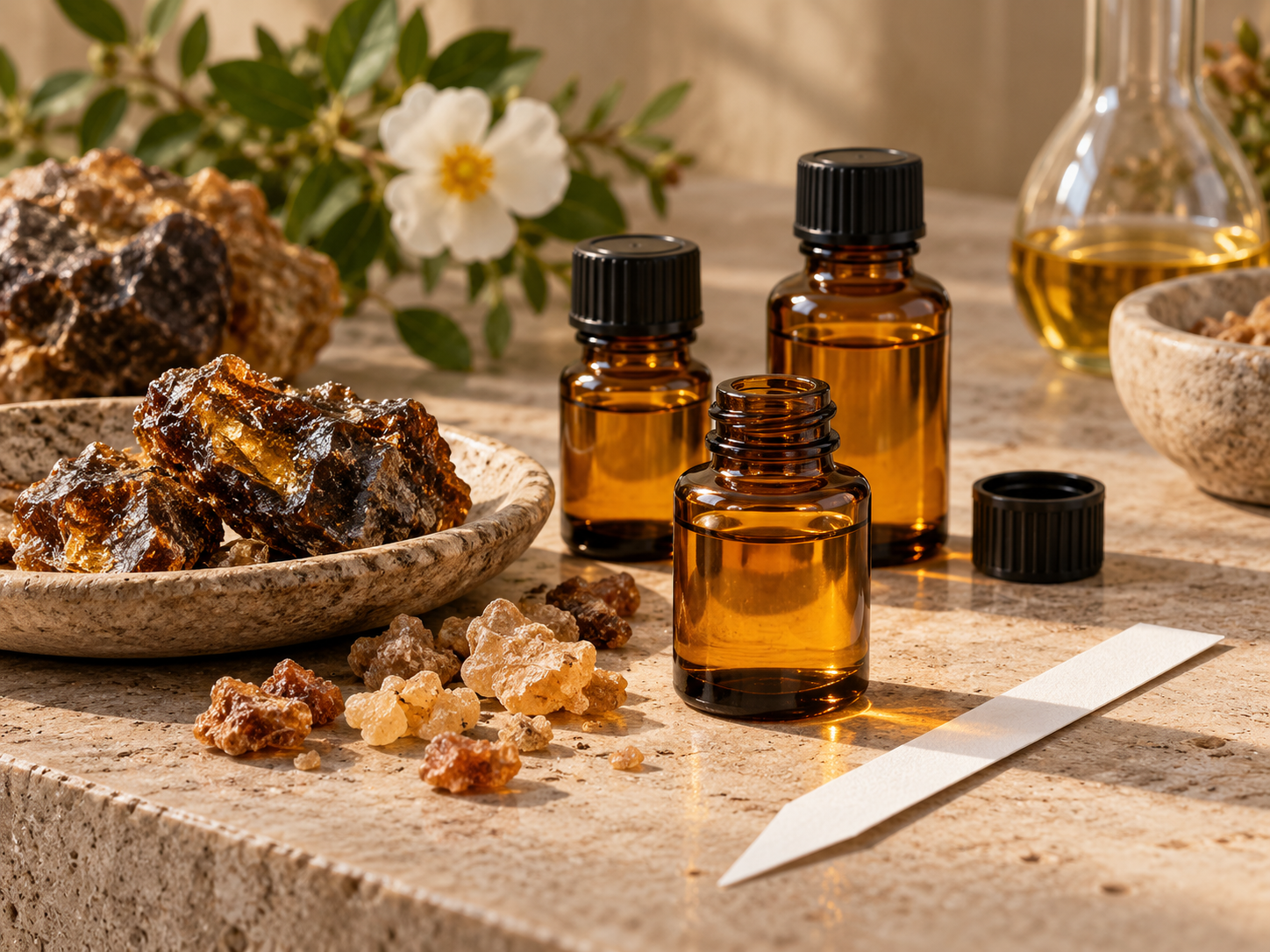
A classic amber accord is built on two resins, labdanum and benzoin, then rounded off with vanilla, tonka, musk and woods. The exact mix is the supplier’s formula, so treat the table below as a map of the usual building blocks, not a recipe.
| Building block | What it is | What it adds |
|---|---|---|
| Labdanum | Resin from the rockrose Cistus ladanifer | A dark, warm, resinous backbone and fixation |
| Benzoin | Resin tapped from Styrax trees | Sweet, balsamic warmth and tenacity |
| Vanilla and tonka | Sweet, creamy materials | Softness and a gourmand-leaning sweetness |
| Musk | Soft, skin-like materials | A smooth, powdery finish |
| Woods and ambroxide-type notes | Dry woods and modern amber molecules | Lift, dryness and diffusion |
| Spices | Cinnamon, cardamom and similar notes | Heat and a darker mood |
Two of these resins are well documented. A 2024 paper in Molecules describes labdanum as the resin of Cistus ladanifer, abundant in the Iberian Peninsula. It says the resin’s main current use is in perfumery, where its aromatic and fixative properties let it stand in for ambergris. The authors also describe two traditional ways to collect it: the Zamorean process uses boiling water, while the Andalusian process uses warm alkaline water and then acid.
A 2023 review in Plants explains that benzoin is a resin that Styrax trees release after the bark is cut. Its main components are benzoic and cinnamic acids and their esters, with some vanillin. The review describes Siam benzoin as sweeter and vanilla-like and Sumatra benzoin as spicier, and it says benzoin’s tenacity helps keep volatile top and middle notes from being lost.
Is amber the same as ambergris, ambroxan or amberwood?
No. Amber is a blended accord, while ambergris, ambroxan and amberwood are different materials that are sometimes used inside or next to it. Mixing the terms up leads to wrong expectations in briefs and wrong claims on labels.
| Term | What it is | How it smells | Used in modern fragrance oil? |
|---|---|---|---|
| Amber (accord) | A blend of resins, vanilla, musk and woods | Warm, sweet, resinous, powdery | Yes, this is the usual meaning of “amber” |
| Fossil amber | Gemstone of ancient tree resin | Not a scent material | No, it only lends the name |
| Ambergris | A sperm whale excretion | Salty, marine, animalic | Replaced by synthetic materials in perfume manufacture |
| Ambroxan / ambroxide | A synthetic or semisynthetic amber-type molecule | Dry, woody, warm, skin-like | Yes, as one ingredient among others |
| Amberwood | A trade term for dry, woody amber-type notes | Dry, woody, clean | Yes, and the exact material varies by supplier |
A 2020 review in Molecules explains the ambergris point. It says sperm whales are endangered, that synthetic ambroxides have replaced ambergris in perfume manufacture, and that the fragrance industry gets its ambrafuran (Ambrox) materials entirely from synthetic or semisynthetic sources. It also names sclareol, a compound from clary sage, as the labdane most used in industry to make them.
A 2026 review in Frontiers in Bioengineering and Biotechnology adds that ambroxide and related compounds are valued in the fragrance industry for their scent and fixative properties. For a buyer, the practical point is simple: an amber oil does not need whale-derived material, and your supplier should be able to tell you what the “amber” part is made of.
What does amber blend with?
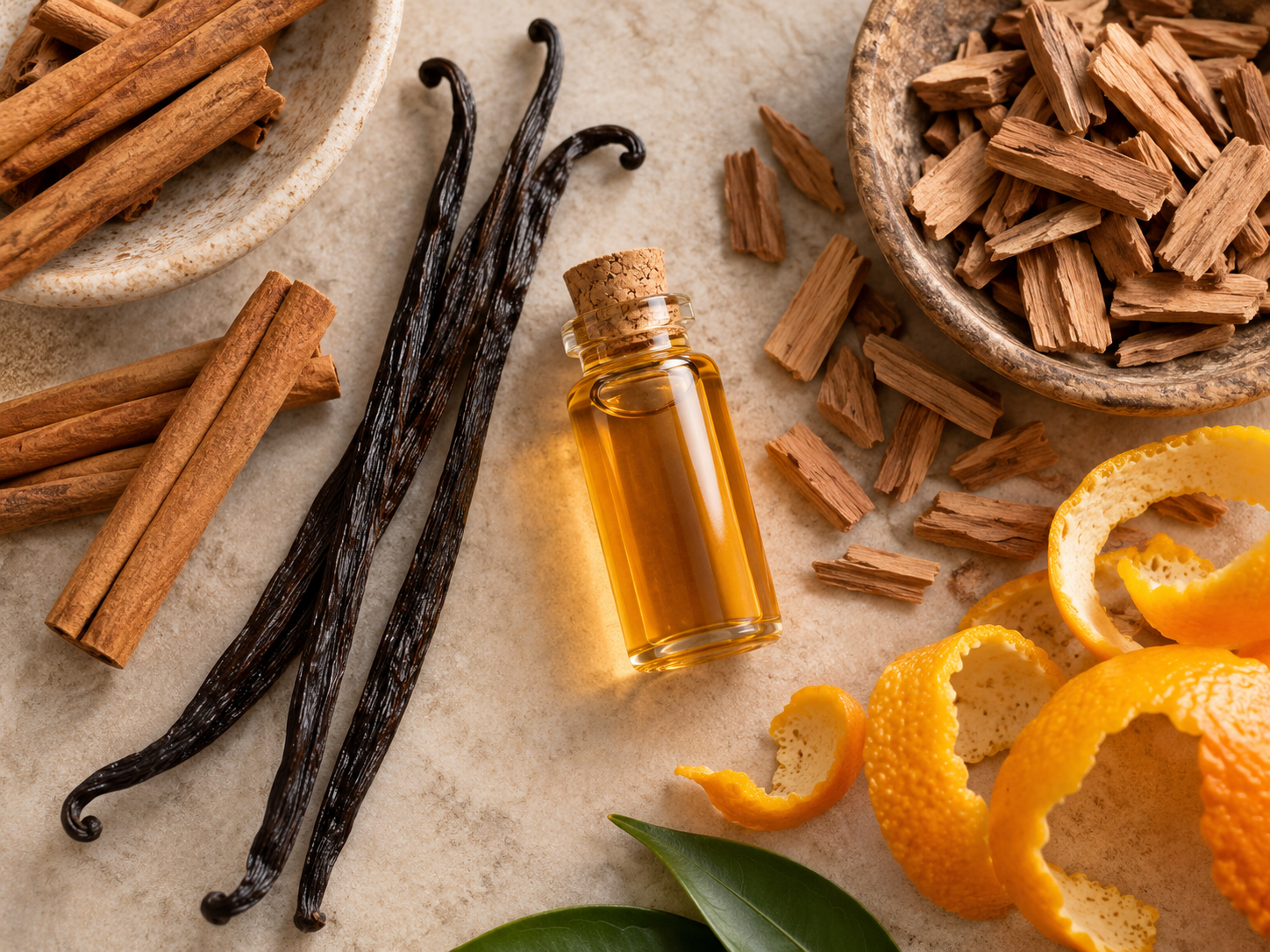
Amber blends with almost every family: vanilla and tonka make it sweeter, woods make it drier, citrus makes it lighter, and spice makes it darker. Because amber is a base accord, it usually supports a brighter top rather than leading the scent alone.
| Partner family | What changes | Product direction |
|---|---|---|
| Vanilla, tonka | Sweeter and creamier | Cozy candles, wax melts |
| Sandalwood, cedar, vetiver | Drier and more grounded | Diffuser oils, hospitality scents |
| Patchouli | Earthier, with more depth | Premium candles, perfume oils |
| Citrus (bergamot, orange) | Brighter, usable in warmer months | Daytime sprays, year-round diffusers |
| Rose, jasmine, powdery florals | Softer and more elegant | Perfume oils, gift sets |
| Cinnamon, clove-type spice | Darker, warmer, seasonal | Autumn and winter ranges |
| Musk | Smoother and more skin-like | Linen sprays, personal scents |
For the sweet side of amber, our tonka fragrance guide explains a note that often sits inside amber accords.
Where does amber fragrance oil work best in products?
Amber fragrance oil works best in products meant to feel warm and long-lasting, such as candles, wax melts, room sprays and diffusers. Each format needs its own test, because the same oil can read soft in a diffuser and heavy in wax.
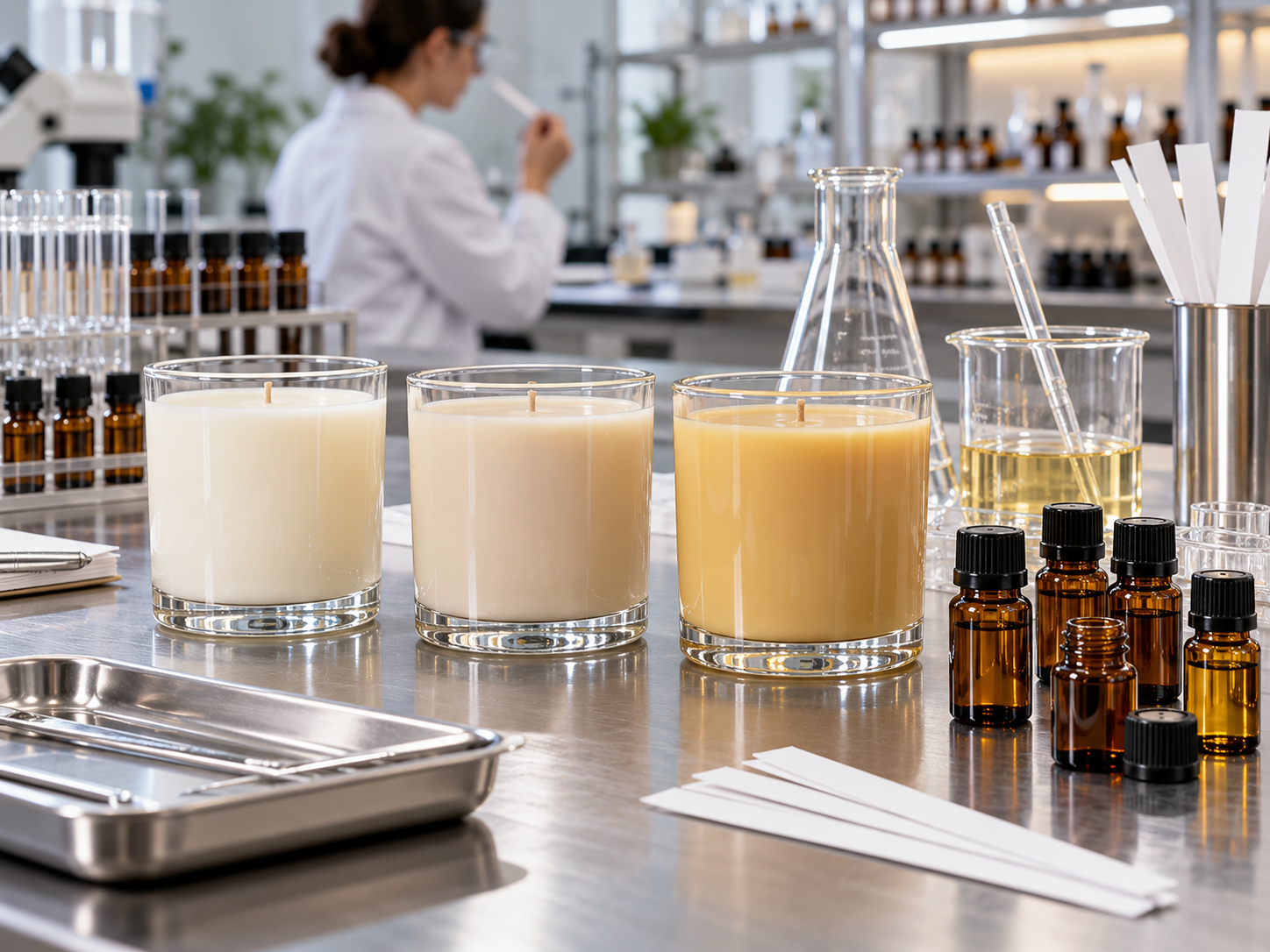
- Candles: amber is a common choice for cozy, autumn and winter ranges. Test hot throw, cold throw and color in your wax. Our candle fragrance oils page and the guide to choosing a candle fragrance cover the wider checks.
- Diffusers and room sprays: test the oil in your carrier or reed base for clarity, color and how far the scent travels. See the home fragrance oils range for the product types involved.
- Perfume oils: concentrated, alcohol-free amber oils suit roll-ons and customer-diluted products. The base is the same, but the dose and carrier change the result.
- Season and mood: retail scent guides usually place amber in autumn, winter and evening ranges, and note that citrus or other light notes make it work in warmer months. Plan the amber style to match your launch calendar.
What should brands and buyers check?
Check six things before you add an amber scent to a range: the brief, the claim, the color, the base, the documents and the quantity. These decide whether the production scent matches the sample.
- The brief: write down which amber you want, such as soft and creamy, dry and woody, or spicy. A one-word “amber” request returns very different samples.
- The claim: keep label and marketing wording in line with what the supplier can document. Do not imply ambergris, fossil amber or a natural origin unless the supplier supports it in writing.
- The color: sweet, vanilla-rich oils can look darker than the scent suggests, and they may tint pale wax or soap. Trial a small batch in your own base before you print packaging.
- The base: test scent throw, stability and any change over time in the real wax, carrier or spray base.
- The documents: ask for the IFRA documentation and SDS for the specific oil and batch. Our IFRA compliance guide explains what to request.
- The quantity: confirm the minimum order for your service type, not a single headline number, and keep a retained reference sample for repeat orders.
How does CQ Fragrance approach this?
CQ Fragrance (Dongguan Chengquan Fragrance Technology Co., Ltd.) is a fragrance oil manufacturer that lists custom fragrance development, fragrance duplication, OEM/ODM production, private label and wholesale supply. Its site covers candle, diffuser, car, home and perfume-oil products, and it lists Woody, Floral and Gourmand among its fragrance families.
- Brief: a brand can bring a scent concept or reference, and the team works from it through sampling.
- Library: CQ Fragrance describes a library of production-tested formulas.
- Verification: the site says components are checked by GC-MS and that formula records support batch consistency.
- Documents: the site lists IFRA-related documentation, MSDS and export documents. Buyers should still ask for the documents for the specific fragrance and batch.
- Minimums depend on the service: its OEM/ODM page lists production from 1 kg per fragrance, its wholesale page lists bulk supply from 100 L per fragrance, and its private label page lists finished products from 500 units per SKU. Confirm terms per project.
The site also says one scent can often be adapted across candles, diffusers and sprays, with performance testing in each format.
Sourcing fragrance oil for your range?
Share your amber brief and product format, and CQ Fragrance can help with custom development, OEM/ODM production or private label sampling.
Request a quoteFrequently Asked Questions
What does amber fragrance oil smell like?
Amber fragrance oil smells warm, lightly sweet, musky and resinous, often with a powdery or balsamic finish and sometimes a hint of spice. The exact balance depends on the supplier’s formula, so approve it by sample.
Does amber fragrance oil contain real amber or ambergris?
Amber fragrance oil does not contain fossil amber, and it does not need ambergris. It is an accord built from materials such as labdanum, benzoin, vanilla, musk and woods, and a 2020 review in Molecules notes that synthetic ambroxides have replaced ambergris in perfume manufacture.
What notes are in amber fragrance oil?
Amber fragrance oil usually contains labdanum, benzoin, vanilla or tonka, musk and woods, and darker versions add spice. There is no single standard formula, so ask the supplier for a scent description and a sample.
Can amber fragrance oil be used in candles and diffusers?
Amber fragrance oil can be used in candles and diffusers, but each format needs its own performance test. Check scent throw, color and stability in your actual wax or carrier before launch, and do not copy a dose from another product.
Is amber fragrance oil the same as vanilla?
Amber fragrance oil is not the same as vanilla, although vanilla is one of its common building blocks. Amber adds resins, musk and woods that give it more depth and a drier, more complex finish than a straight vanilla oil.
Bottom line
Amber fragrance oil is a warm, resinous accord that gives candles, diffusers and perfume oils depth and staying power. For brands, the key questions are which amber style you want, how the oil behaves in your base and which documents come with each batch. Write a clear brief, test color and throw in your own format, and confirm the minimum order for your service.