
Short answer
Patchouli is an aromatic herb, Pogostemon cablin, whose dried leaves are steam-distilled into a dark, earthy oil used mainly as a base note and fixative in perfume and home fragrance. It smells earthy, woody, sweet and slightly camphor-like, often with cocoa or damp-soil facets. Brands use it to add depth and to hold lighter top notes in place.
Key Takeaways
- Patchouli oil comes from the leaves of Pogostemon cablin, a herb in the mint family (Lamiaceae), not from a flower.
- The scent is earthy, woody, sweet and camphor-like, and it dries down as a long, soft base.
- Drying time, distillation and handling change oil yield and patchouli alcohol content, so batches and suppliers differ.
- Natural oil, refined grades and compounded patchouli-type oils behave differently in candles, diffusers and perfume oils.
- Test color, scent throw and documents on the exact oil and batch before you commit to a range.
What does patchouli smell like?
Patchouli smells earthy, woody and slightly sweet, with a camphor-like edge and, in many oils, a dark cocoa or damp-soil note. Perfumers usually describe it as a deep, rich base rather than a bright top note.
The main scent facets are:
- Earthy: damp soil, forest floor and dried leaves.
- Woody: a dry, slightly resinous depth that pairs well with other woods.
- Sweet and balsamic: a soft, warm sweetness that rounds off the dark side.
- Camphor-like: a cool, medicinal edge that is stronger in the opening.
- Cocoa-like: a dark, almost chocolatey note that shows in some oils and some dry-downs.
In most compositions, patchouli opens sharper and greener, settles into a rich earthy heart, and ends as a long, soft woody-sweet base. The exact balance changes with the oil grade, the dose and the other materials around it.
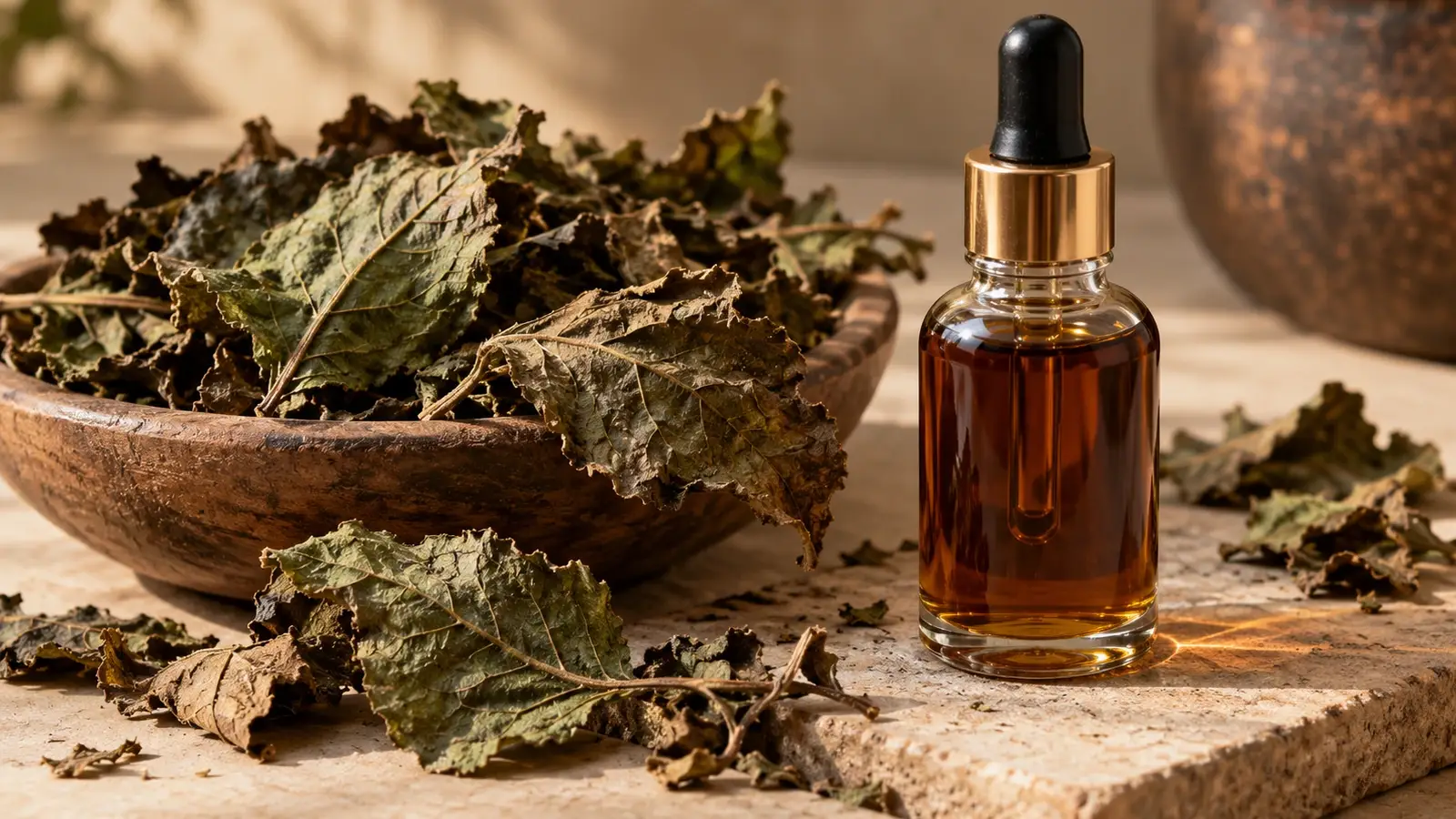
Where does patchouli come from?
Patchouli comes from Pogostemon cablin, a herb in the mint family (Lamiaceae). A 2015 review in Molecules describes it as native to the Philippines, growing wild in many Asian countries, and now cultivated commercially in India, Indonesia, Malaysia, China, Singapore, West Africa and Vietnam.
The scent material sits mostly in the leaves. In a 2023 GC-MS study in Frontiers in Plant Science, patchouli alcohol was the main compound in all tissues tested, and leaves held the most (24.89 mg/g dry weight, against 2.72 mg/g in stems and 3.71 mg/g in flowers).
- Patchouli alcohol (patchoulol): the main component of the oil and a common quality reference.
- Origin: climate, variety and harvest all shift the oil’s profile, so origin alone does not guarantee a scent.
How is patchouli oil made?
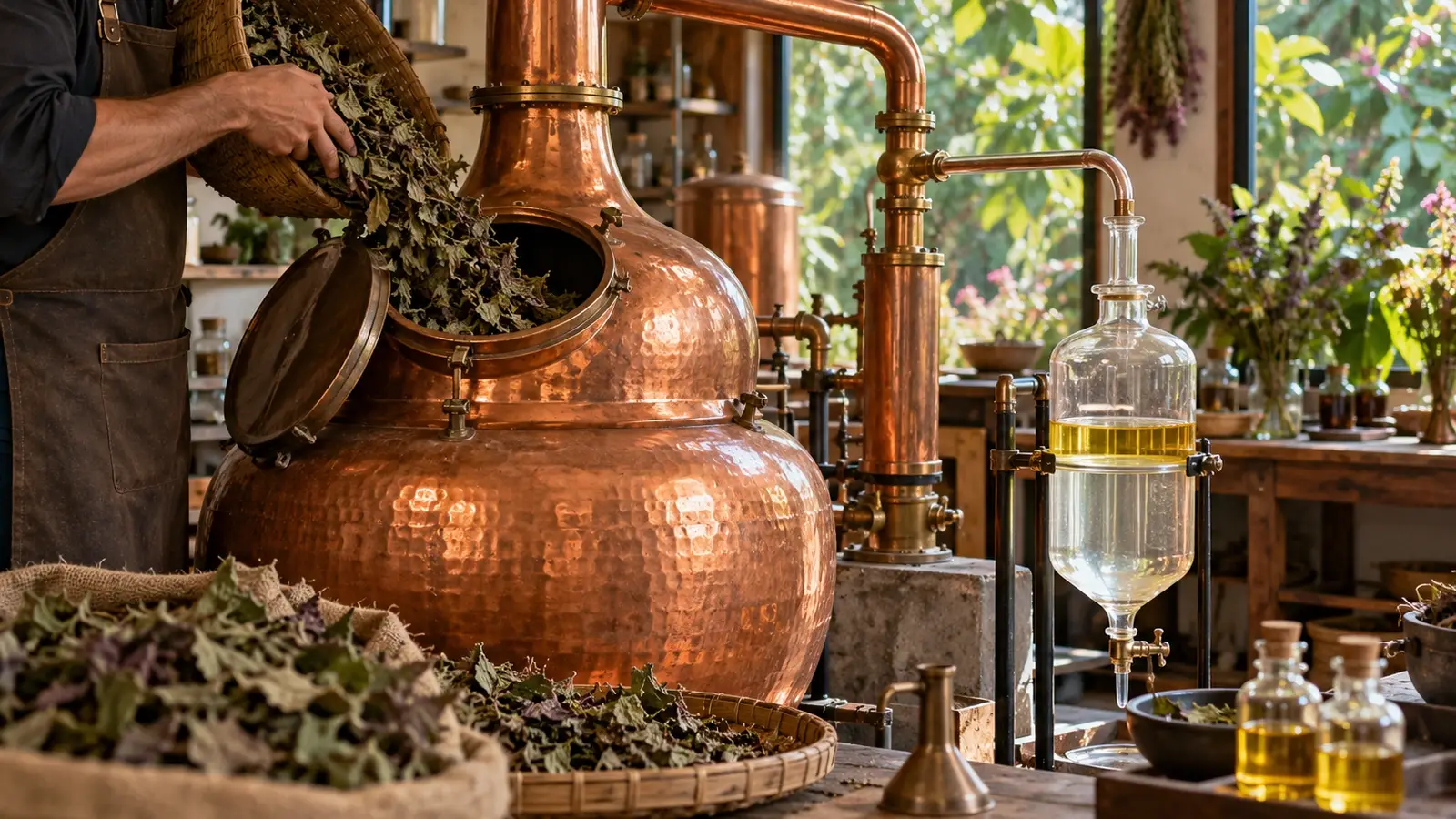
Patchouli oil is made by steam distillation of dried leaves. The 2015 review notes that the leaves are shade-dried first, and that supercritical CO2, molecular distillation and microwave-assisted extraction are alternatives.
A 2024 small-scale Indonesian study in The Scientific World Journal shows how the steps work in practice:
- Cut: fresh leaves and twigs are chopped into smaller pieces.
- Dry: the material is sun-dried for two days, then shade-dried for 5, 6 or 7 days.
- Distill: steam and water distillation runs for about three hours, until no more oil comes out with the condensate.
- Separate: the oil is collected from the condensate in a separator.
Oil yield in that study ranged from 0.17% to 1.40%, depending on condenser cooling-water flow and drying time. The table below shows the best-performing cooling setting.
| Shade-drying time | Oil yield at 1.74 L/min cooling water |
|---|---|
| 5 days | 1.40% |
| 6 days | 1.30% |
| 7 days | 1.23% |
The same authors treat patchouli alcohol as the main quality reference. They report that Indonesian patchouli oil has less than 30% patchouli alcohol and link this to postharvest handling, a non-optimal distillation process and short distillation times. This was a lab-scale test, so use it to understand why batches vary, not as a production benchmark.
Why do perfumers use patchouli?
Perfumers use patchouli as a base note and fixative: it adds depth and helps hold lighter notes in place. The 2015 review says the oil can give a “strong base, lasting character, fixative properties”, and the 2023 study describes the plant as a fixative for various perfumes.
In practice, patchouli does four jobs:
- Depth: it gives light citrus or floral tops a dark, grounded base.
- Fixation: it slows how fast brighter notes fade on skin, fabric or wax.
- Bridge: it connects sweet notes (amber, vanilla, tonka) to dry ones (wood, vetiver).
- Texture: it adds a velvety, slightly damp richness that synthetic woods often lack.
What does patchouli blend with?
Patchouli blends best with citrus, florals, woods, amber and spice, and it anchors chypre, amber and woody accords. Dose matters more than the partner: a small amount adds depth, while a large one can dominate.
| Partner family | What patchouli adds | Typical product direction |
|---|---|---|
| Citrus (bergamot, lemon) | Grounds a sharp, bright opening | Fresh-woody candles, room sprays |
| Floral (rose, geranium) | Adds earthy depth to sweet petals | Perfume oils, soap-like blends |
| Woods (sandalwood, cedar, vetiver) | Deepens the dry, earthy side | Diffuser oils, hotel-style scents |
| Amber, vanilla, tonka | Cuts sweetness with dark earth | Cozy candles, wax melts |
| Spice and leather | Adds a smoky, resinous backbone | Premium candles, car scents |
For a sweeter direction, see our tonka fragrance guide, which covers a note that often sits next to patchouli in warm blends.
Which patchouli form should a brand choose?
Brands usually choose between natural oil, a refined grade or a compounded patchouli-type fragrance oil. Each form trades richness against consistency, so match the form to the product.
| Form | What it is | Strength | Watch-outs |
|---|---|---|---|
| Natural patchouli oil | Steam-distilled from dried leaves | Rich, complex, authentic character | Varies by origin, harvest and batch; often dark in color |
| Refined or “clean” grade | Natural oil processed to soften or adjust its character | Smoother, easier to blend | Ask what was changed and how it affects performance |
| Compounded patchouli-type oil | A perfumer’s blend built around a patchouli character | Consistent and tunable to a brief | Confirm the formula suits your base and your labelling claims |
If you plan natural-positioned products, read our guide to natural fragrance oils before you set claims.
What should brands and buyers check?
Check five things before you add a patchouli scent to a range: form, consistency, base compatibility, documents and quantity. These decide whether the scent performs the same in production as it did on the sample strip.
- Form and name: ask whether the oil is natural, refined or compounded, and keep your product claims in line with the answer.
- Batch consistency: ask how the supplier controls batch-to-batch variation, and keep a retained reference sample. A GC-MS profile helps, since patchouli alcohol is the usual quality marker.
- Base compatibility: test scent throw, color and any discoloration in your actual wax, diffuser base or perfume-oil carrier. Patchouli oils are often dark, so pale products need a trial.
- Documents: request the IFRA documentation and SDS for the specific oil and batch. Our IFRA compliance guide explains what to ask for.
- Quantity: confirm the minimum order for your service type, not just a headline number.
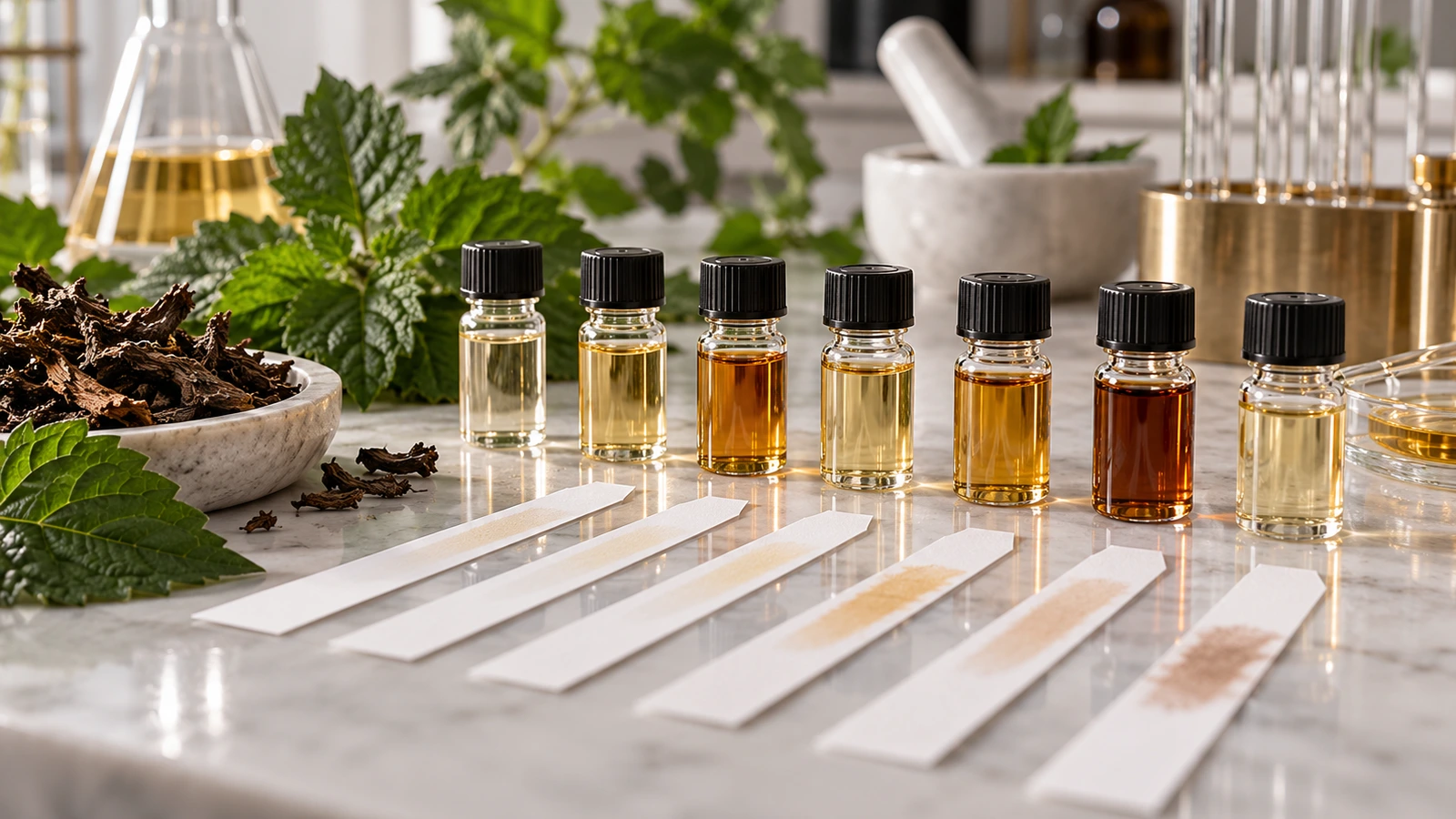
Patchouli-led scents suit candle fragrance oils as well as diffusers and sprays, but each format needs its own performance test. Dose and scent throw should be set by testing in your base, not copied from another product.
How does CQ Fragrance approach this?
CQ Fragrance (Dongguan Chengquan Fragrance Technology Co., Ltd.) is a fragrance oil manufacturer that lists custom fragrance development, fragrance duplication, OEM/ODM production, private label and wholesale supply. Its site lists Woody among its fragrance families, with a dedicated page for woody fragrance oils, and describes concentrated alcohol-free perfume oils that customers dilute with their own alcohol.
- Brief: a brand can bring a scent concept or reference, and the development team works from it through sampling.
- Library: CQ Fragrance describes a library of production-tested formulas.
- Verification: the site says components are checked by GC-MS and that formula records support batch consistency.
- Documents: the site lists IFRA-related documentation, MSDS and export documents. Buyers should still ask for the documents for the specific fragrance and batch.
- Minimums depend on the service: its OEM/ODM page lists production from 1 kg per fragrance, its wholesale page lists bulk supply from 100 L per fragrance, and its private label page lists finished products from 500 units per SKU. Confirm terms per project.
The site also says one scent can often be adapted across candles, diffusers and sprays, with performance testing in each format.
Sourcing fragrance oil for your range?
Share your scent brief and product format, and CQ Fragrance can help with custom development, OEM/ODM production or private label sampling.
Request a quoteFrequently Asked Questions
What is patchouli used for in perfume?
Patchouli is used in perfume as a base note and fixative that adds earthy depth and helps lighter notes last longer. It also bridges sweet notes such as amber and vanilla with dry woods, which is why it appears in many chypre, amber and woody accords.
What does patchouli smell like?
Patchouli smells earthy, woody and slightly sweet, with a camphor-like edge and sometimes a dark cocoa or damp-soil note. It usually opens sharper and settles into a long, soft base.
Is patchouli a flower or a leaf?
Patchouli oil comes from the leaves of Pogostemon cablin, a herb in the mint family, not from a flower. Research shows leaves hold the most patchouli alcohol, which is why they are the part that is dried and distilled.
Does patchouli oil smell the same from every supplier?
Patchouli oil does not smell the same from every supplier, because origin, drying, distillation and refining all change the result. A small-scale distillation study found that oil yield varies with drying time and cooling-water flow, and it links low patchouli alcohol content to poor handling, so ask for a reference sample and test each batch.
Can patchouli be used in candles and diffusers?
Patchouli can be used in candles and diffusers, but each product needs its own performance test. The oil is often dark and strong, so check scent throw, color and discoloration in your own wax or diffuser base before launch.
Bottom line
Patchouli is a leaf-derived, earthy-woody base note that gives fragrance depth and staying power. For brands, the real questions are which form to buy, how consistent the batches are and whether the paperwork matches the exact oil. Test in your own base, ask for documents per batch, and brief your supplier with a clear reference.