
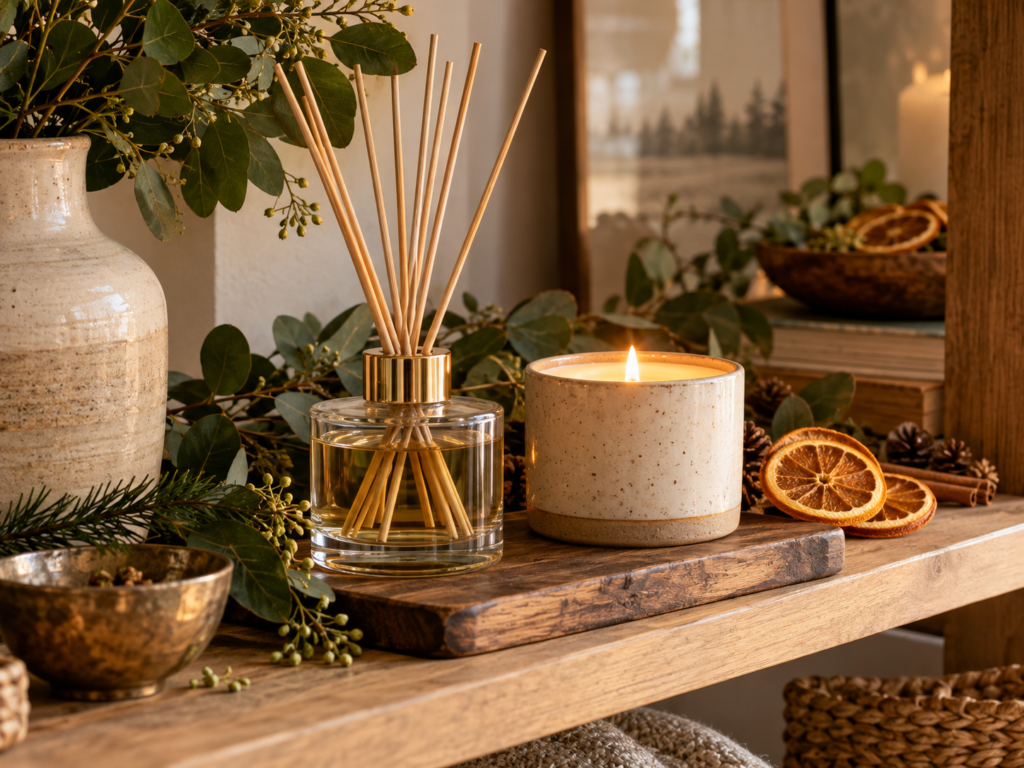
Bright citrus and green notes suit spring, aquatic and fruity scents carry summer, warm spice and gourmand notes own fall, and woody amber blends anchor winter, with clear reasons behind each shift.
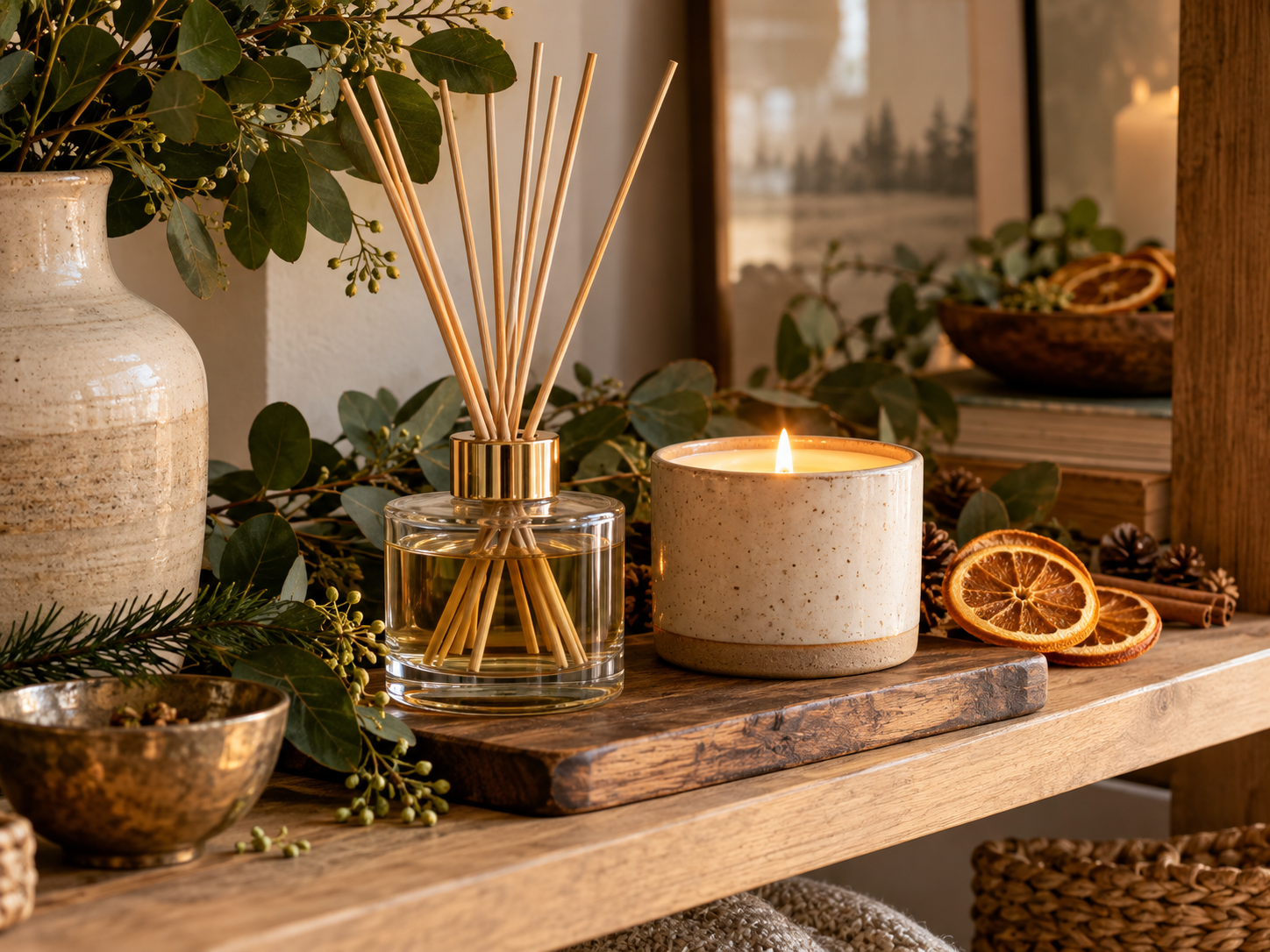
The scent that feels perfect in your home in July can feel out of place by November, and that’s not just in your head. Our sense of smell is closely tied to temperature, light, and seasonal mood, so the fragrance families that feel “right” shift in a predictable pattern across the year: light and green in spring, fresh and fruity in summer, warm and spiced in fall, and rich and woody in winter.
Key Takeaways
- Spring calls for citrus, green, and light floral notes that mirror new growth and cooler air.
- Summer scents should stay lighter overall, since heat intensifies how strong a fragrance smells.
- Fall favors warm spice, gourmand, and woody notes that read as cozy once temperatures drop.
- Winter works best with deep amber, woody, and resinous scents that feel grounding in low light.
- A quick-reference table below maps each season to its core scent families and example notes.
Why Scent Preferences Change With the Seasons
Fragrance perception genuinely shifts with temperature and humidity, not just personal taste. Warmer air moves scent molecules faster and makes fragrances smell stronger and more diffusive, which is part of why heavy, warm scents that feel comforting in winter can feel cloying in summer. Researchers at institutions like the Monell Chemical Senses Center have long studied how environmental conditions and context shape the way we perceive odors, and that science lines up with what most people notice intuitively: a cinnamon-and-clove candle feels wonderful in December and slightly overwhelming in June.
Seasonal scenting is also about mood and association, not just chemistry. Certain notes are so strongly linked to specific times of year, think pine in December or coconut in July, that they trigger an emotional response before you consciously register the smell itself. This is why swapping your home fragrance with the calendar can make a space feel more current and intentional, even if nothing else in the room has changed.
Quick-Reference Table: Scent Families by Season
Use this table as a fast starting point before diving into the details below.
| Season | Core Scent Families | Example Notes | Best For |
|---|---|---|---|
| Spring | Citrus, Green, Light Floral | Bergamot, grass, muguet, jasmine, mint | Renewal, deep-clean freshness |
| Summer | Aquatic, Fruity, Light Citrus | Sea salt, coconut, watermelon, grapefruit | Airy, breezy rooms and outdoor spaces |
| Fall | Spice, Gourmand, Light Woods | Cinnamon, clove, vanilla, cedar, fig | Cozy, warm entertaining spaces |
| Winter | Woody, Amber, Resinous | Sandalwood, amber, frankincense, pine | Grounding, long dark evenings |
Spring: Citrus, Green, and Light Floral Notes
Spring scenting works best when it feels fresh and unfussy, echoing the transition out of winter. As days lengthen and windows open, lighter fragrance families read as clean rather than sparse, especially citrus notes like bergamot and grapefruit alongside green notes such as cut grass or fig leaf. Lifestyle publications like Real Simple frequently point to exactly this kind of seasonal refresh as an easy way to make a home feel new without redecorating.
A few reliable spring pairings make the transition easy.
- Bergamot with white tea for a crisp, quiet freshness
- Cut grass with muguet (lily of the valley) for a true “just mowed” garden feel
- Grapefruit with mint for an energizing morning scent
- Fig leaf with light musk for something green but still soft
For a full breakdown of spring and summer scenting, including how to transition away from heavy winter fragrances, see our deeper guide on the best spring and summer scents to freshen up your home.
Summer: Aquatic and Fruity Freshness
Summer scenting should lean lighter overall, not just fruitier, because heat amplifies how strong any fragrance reads in a room. Aquatic notes built around sea salt, driftwood, or ozonic accords pair naturally with juicy fruity notes like watermelon or coconut for a scent profile that feels breezy rather than heavy. The International Fragrance Association publishes general consumer-facing background on how fragrance families are categorized, which is a useful reference if you’re new to shopping by scent family rather than by brand.
This is also the season where reed and electric diffusers tend to outperform candles, since they scent a room without adding heat. If you’re deciding between the two, our guide on candles versus reed diffusers breaks down which method suits which season and space.
Fall: Warm Spice and Gourmand Comfort
Fall is when warm, spiced, and gourmand fragrances take over, and for good reason: they mirror the comfort-food, sweater-weather mood of the season. Cinnamon, clove, nutmeg, and vanilla dominate this window, often layered with gourmand notes like brown sugar, baked apple, or maple.
Popular fall pairings tend to combine one spice-forward note with one softer, rounding note.
- Cinnamon with vanilla for a classic bakery-style warmth
- Clove with orange peel for a spiced-citrus twist
- Fig with cedarwood for something cozy but less sweet
- Pumpkin spice with amber for a deeper, less candy-like take
Fall scenting has its own set of rules around layering and avoiding an overpowering room, which is why we cover it separately in our fall and winter home fragrance guide.
Winter: Woody, Amber, and Resinous Depth
Winter calls for the richest, most grounding scents of the year, largely because of shorter days and colder air. Woody notes built around sandalwood, cedar, or vetiver pair beautifully with amber, frankincense, or pine for a scent profile that feels warm without being sweet. Architectural Digest and similar design publications regularly note that warm, low-light interiors call for deeper, more resinous scents than bright summer rooms do.
These deeper notes also tend to have better longevity in candle form, which matters more in winter when a room is scented for hours during long evenings indoors. Our guide to making a fragrance last longer is useful further reading if you notice winter scents fading faster than expected in dry, heated air.
Building a Signature Scent That Shifts With the Seasons
Many hotels and boutiques rotate their signature scent seasonally instead of using one fragrance year-round, and home scenting can follow the same logic. Looking at how properties choose hotel fragrance oils for lobbies and guest rooms is a useful reference point, since hospitality brands often intentionally shift from lighter, brighter blends in warmer months to deeper, warmer ones as the year turns.
A seasonal rotation also keeps a space from feeling static. Consider building a small rotation of four go-to scents, one per season, using a dedicated candle for evening ambiance and a richer blend for special occasions or gifting, much like the seasonal rotations Better Homes & Gardens often recommends for refreshing a home’s mood throughout the year.
General Tips for Scenting Any Season Well
A few habits apply no matter what time of year it is.
- Match scent intensity to room size, since a strong fragrance in a small room reads as overwhelming regardless of season
- Follow basic candle safety guidance, such as the tips published by the National Candle Association, including trimming wicks and never leaving a burning candle unattended
- Layer, don’t stack, by using one dominant scent per room instead of multiple competing fragrances
- Refresh seasonally rather than yearly, since a scent swapped every few months feels more intentional than one left unchanged all year, a habit also covered in general terms by the NIH News in Health resource on how our sense of smell adapts over time
Curious How These Scents Are Made?
If you’re interested in how fragrance oils are developed and sourced behind the scenes, CQ Fragrance shares more about our craft and process.