
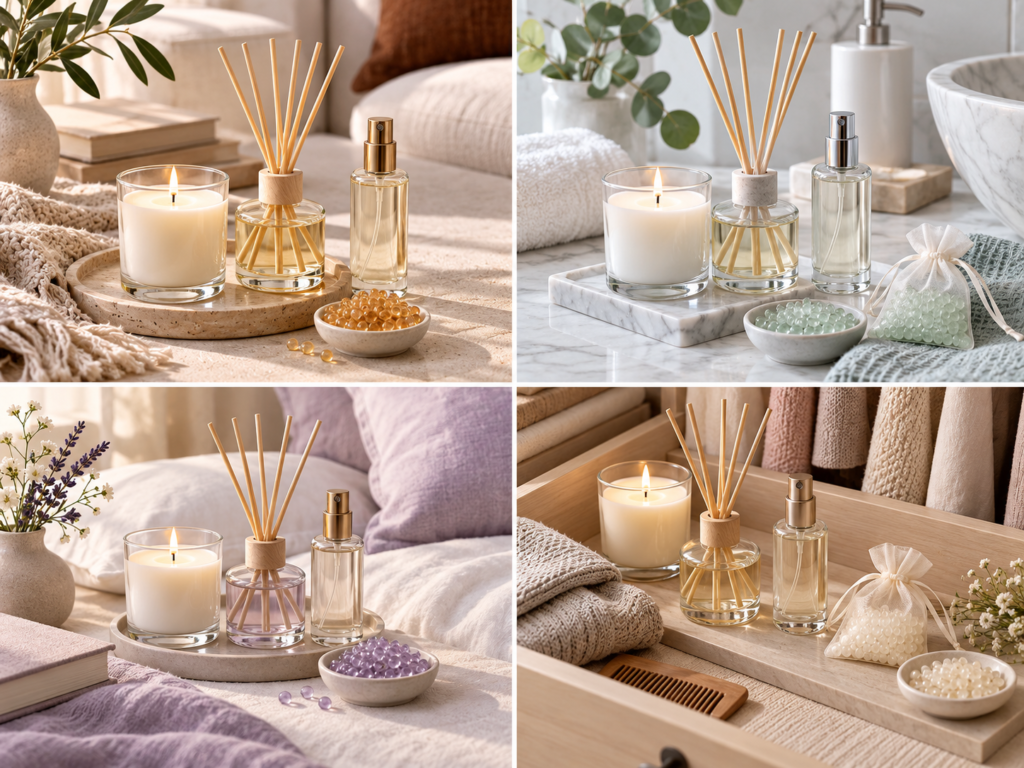
Each room in your home works best with a specific scent family and format: light citrus in the kitchen, calming low-intensity scents in the bedroom, and richer notes in shared living spaces.
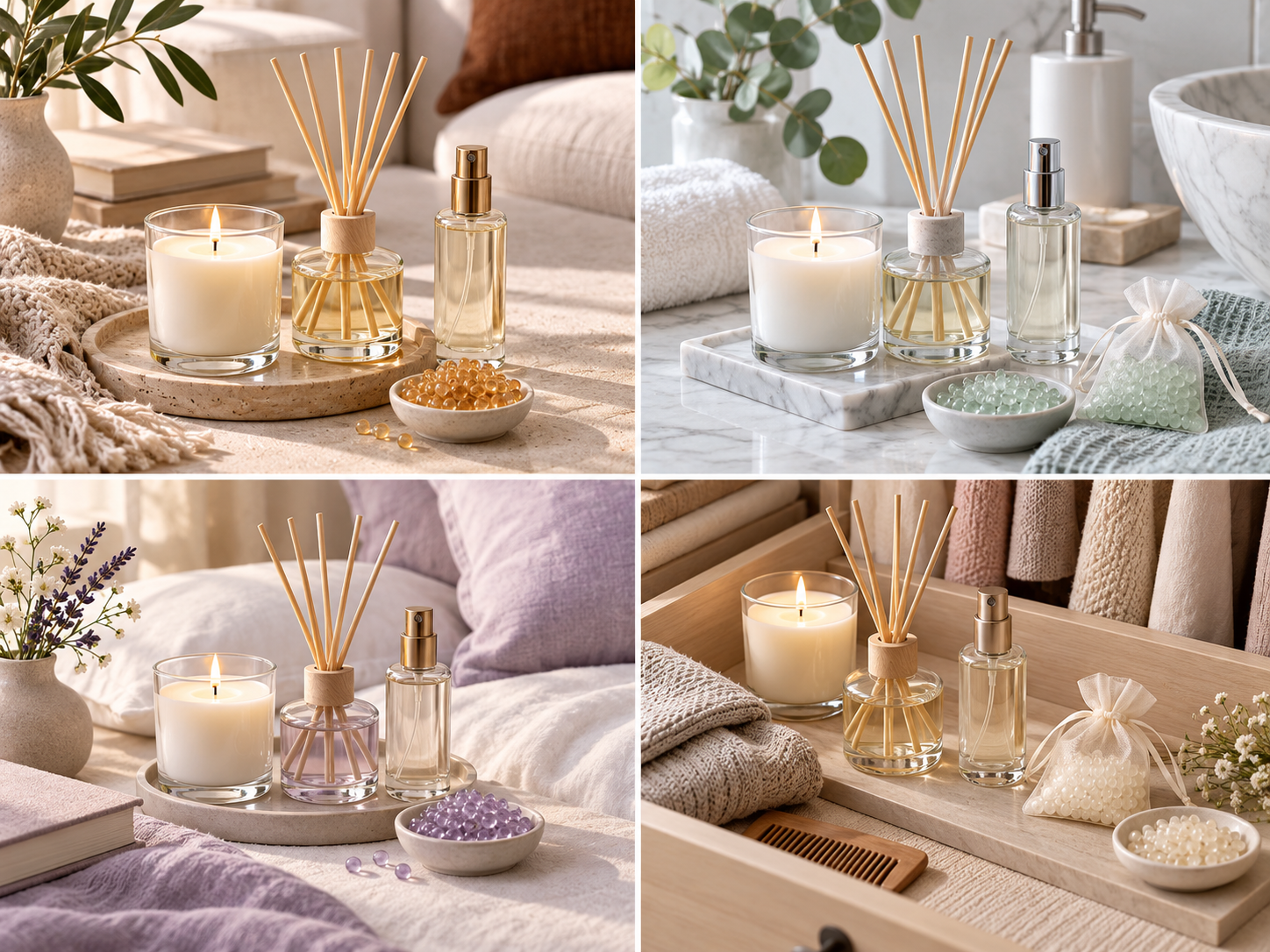
The best home fragrance for a room depends on how that room is used: kitchens need light, non-competing scents, bedrooms need calming low-intensity fragrance, bathrooms need something clean and odor-cutting, and shared living spaces can handle richer, more complex scents. Using the same strong candle throughout the house is one of the most common home-fragrance mistakes, since a scent that works beautifully in a living room can overwhelm a small bathroom or clash with dinner cooking in the kitchen.
Key Takeaways
- Match scent family to room function, not just personal favorite: fresh in the kitchen, calming in the bedroom, warm in living spaces.
- Small, enclosed rooms like bathrooms and closets suit lighter formats such as sachet beads over strong candles.
- Avoid heavy gourmand or food-adjacent scents in the kitchen, where they compete with real cooking smells.
- Bedrooms benefit from low-intensity, non-stimulating scents rather than bold, energizing ones.
- Entryways set the first impression, so a welcoming, moderate-strength scent works better than an overpowering one.
Quick Reference: Scent and Format by Room
This table summarizes the room-by-room recommendations covered in detail below.
| Room | Best Scent Family | Best Format |
|---|---|---|
| Living Room | Woody, floral, or gourmand | Candle + diffuser |
| Bedroom | Soft floral or light woody | Diffuser or low-intensity candle |
| Bathroom | Citrus or aquatic | Sachet beads or room spray |
| Kitchen | Citrus or green | Reed diffuser (away from stovetop) |
| Entryway/Foyer | Fresh floral or light woody | Reed diffuser or sachet beads |
| Home Office | Green or light woody | Diffuser |
Living Room: Warm, Layered, and Inviting
The living room can handle the richest, most complex scents in the house because it’s a shared, well-ventilated space where guests spend the most time. Deeper woody fragrance oils, romantic floral fragrance oils, or cozy gourmand fragrance oils all tend to work well here.
- Combine a candle for evening ambiance with a diffuser for consistent daytime scent.
- Choose bolder scent families here since open-plan living rooms have more air volume to fill.
- Save the strongest, most statement-making fragrance in the house for this room, since it’s what guests notice first.
Bedroom: Calm Over Bold
The bedroom needs a low-intensity, calming scent rather than an energizing or heavy one, since strong fragrance in a small, enclosed sleeping space can feel overwhelming rather than relaxing. Soft florals and light woody notes tend to suit bedrooms better than bright citrus or heavy gourmand scents, which are more stimulating.
- Use a reed diffuser or ultrasonic diffuser rather than a candle you have to remember to blow out before sleep.
- Keep intensity low; a bedroom is typically a smaller, more enclosed room than a living space.
- Avoid rotating scents too often here, since a consistent, familiar fragrance tends to support a calmer wind-down routine.
For readers specifically focused on sleep-supportive scenting rather than general bedroom ambiance, that topic is covered separately in the site’s existing guide to relaxing nighttime scents.
Bathroom: Clean and Odor-Cutting
Bathrooms need a scent that reads as clean rather than sweet or heavy, since the room’s job is partly to neutralize humidity and odor in a small, enclosed footprint. Citrus and aquatic notes are popular here because they feel fresh without competing with soap, shampoo, or cleaning product scents already in the room.
- Sachet fragrance beads work particularly well in bathrooms since they scent a small space continuously without an open flame near water.
- Citrus fragrance oils and aquatic fragrance oils both read as clean and fresh rather than heavy.
- A quick-burst room spray after showering handles humidity-related odor faster than a slow-release format.
Kitchen: Light and Non-Competing
The kitchen is the one room where heavy, food-adjacent scents like vanilla, caramel, or baked-good gourmand fragrances tend to backfire, since they compete directly with actual cooking smells instead of complementing them. Light citrus and green notes work better because they read as fresh and clean rather than as another food smell layered on top of dinner.
- Choose citrus fragrance oils or green fragrance oils over gourmand scents in this room specifically.
- Place diffusers away from the stovetop and any direct heat source, both for safety and to keep the scent from mixing with cooking smoke.
- Skip scented candles near active cooking areas, where grease splatter and open flame from cooking are already a consideration.
Entryway and Foyer: First Impressions
The entryway sets the tone for how the whole house smells to a guest walking in, so it benefits from a fresh, welcoming, moderate-strength scent rather than anything overpowering. Because entryways are often small and get frequent door-opening airflow, a format that scents continuously without needing constant attention tends to work best.
- A reed diffuser using home fragrance oils gives steady scent without upkeep.
- Sachet fragrance beads tucked near a console table or coat closet add scent without taking up counter space.
- Keep the entryway scent lighter than the living room’s, since it’s the first note guests smell and shouldn’t compete with what’s coming next.
Home Office: Subtle and Non-Distracting
A home office needs a scent subtle enough not to become distracting during focused work, which rules out anything too sweet, heavy, or attention-grabbing. Green and light woody notes tend to support focus without pulling attention away from the task at hand.
- A small diffuser with green fragrance oil adds a subtle, natural background note.
- Avoid candles in a home office where papers, cords, and electronics are often close by.
- Keep intensity low, similar to the bedroom, since this is a room where residents spend long, continuous stretches of time.
General Principles That Apply to Every Room
A few rules of thumb carry across every room in the house, regardless of which specific scent family fits best.
- Match intensity to room size: small enclosed rooms need less fragrance than large open ones.
- Consider what the room already smells like, whether that’s cooking, soap, or fresh laundry, and choose a scent that complements rather than competes.
- Layer formats within a room when one alone doesn’t provide enough consistent coverage.
- Rotate seasonally so the whole house doesn’t settle into one unchanging, easy-to-adapt-to scent.
These principles, along with the mechanics of layering scent sources and avoiding nose-blindness, are covered in full in this complete guide to making your house smell amazing. If a candle in any of these rooms seems weaker than expected, the likely causes and fixes are broken down in this guide to why a candle doesn’t smell as strong as it should. For readers still deciding between formats room to room, this candle versus reed diffuser comparison and this wax melt versus candle comparison both go deeper on strengths and trade-offs of each option. Publications like Architectural Digest have also covered how scent contributes to a room’s overall design and mood, reinforcing that fragrance choice is as much a design decision as a personal preference one.
Interested in How Scent Families Are Developed?
If you’re curious how fragrance families like floral, woody, and citrus are actually built and blended, take a look behind the scenes at CQ Fragrance.