
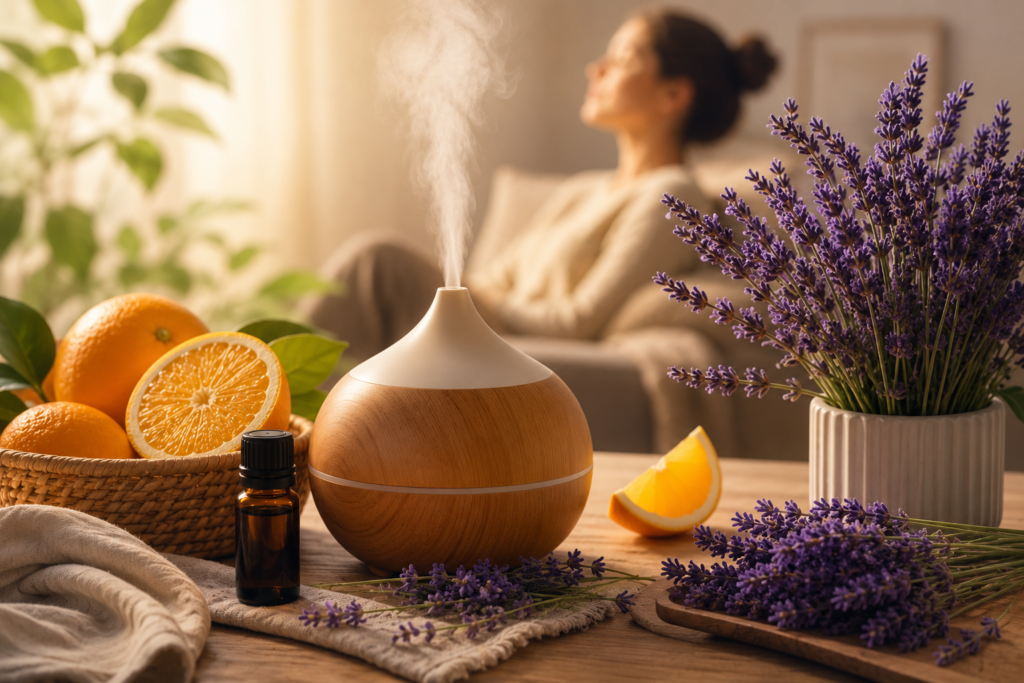
If you’re looking for a gentle way to reset your mood, the answer is fairly simple: lavender works better for emotional tension, stress, and mental overstimulation, while citrus fragrances are more effective for fatigue, low energy, and brain fog.
If your body feels exhausted but your mind refuses to slow down, lavender is usually the better choice. If you’re dealing with afternoon crashes, poor focus, or that drained “I can’t think clearly” feeling, citrus scents tend to work faster. For those who want a balance between relaxation and light refreshment, a lavender and bergamot combination is often one of the most practical options.
Lavender: Better for Stress, Anxiety, and Mental Overload
Lavender remains one of the most recognized calming fragrance profiles for a reason. Its soft herbal-floral character naturally creates a sense of quiet, cleanliness, and emotional comfort.
When anxiety shows up, the issue often isn’t physical tiredness—it’s mental overactivity. Your body may be ready to rest, but your thoughts keep moving.
Lavender is often a good fit for people who:
- struggle to unwind after work
- overthink at night
- feel emotionally tense for long periods
- want a relaxing bedtime ritual
One common mistake is using too much fragrance. A calming scent should shape the atmosphere, not overwhelm the room.
Citrus: Better for Fatigue and Low Energy
If lavender helps you slow down, citrus helps you reset.
Fresh citrus scents create a sense of brightness and clarity, which is why they’re often used in workplaces, hotels, and energizing ambient environments.
Different Citrus Scents, Different Effects
If lavender helps you slow down, citrus helps you reset.
Fresh citrus scents create a sense of brightness and clarity, which is why they’re often used in workplaces, hotels, and energizing ambient environments.

Bergamot
Balanced and softer, ideal for emotional fatigue.

Lemon
Sharper and more stimulating, better for quick mental refreshment.

Sweet Orange
Warmer and easier to enjoy in everyday settings.

Grapefruit
Light, fresh, and ideal for fast mood resets.
If your problem is afternoon fatigue, screen-induced brain fog, or poor focus, citrus often feels more effective than heavier floral or woody profiles.
For a deeper look at citrus fragrance profiles, explore why citrus notes are so popular in fragrance or browse our citrus fragrance oil collection.
Can You Use Lavender and Citrus Together?
Yes—and in many cases, that’s actually the better option.
Lavender helps calm emotional tension. Citrus restores freshness and alertness. Together, they create a balanced atmosphere that feels relaxed without becoming sleepy.
That’s why combinations like lavender and bergamot are commonly used in modern home fragrance oils.
How to Use Aromatherapy More Effectively
Choosing the right scent matters, but how you use it matters just as much.
For Anxiety Relief
Use lavender in the evening as part of a wind-down routine. Gentle diffusion for 30–60 minutes is usually enough.
For controlled scent delivery, diffuser fragrance oils are often a practical choice.
For Midday Fatigue
Use citrus during the day, especially during low-energy periods. Short diffusion sessions usually work better than constant exposure.
For Balanced Recovery
Lavender and bergamot work especially well for reading, meditation, or decompressing after work.
Final Answer
If anxiety, stress, or mental overstimulation are your main concerns, lavender is usually the stronger option. If fatigue, low focus, and sluggishness are the issue, citrus tends to work faster.
If you want something balanced, lavender and bergamot remains one of the most versatile combinations.