
If you live with pets, here’s the short answer: not every scented candle is harmful, but not every “natural,” essential oil-based, or cruelty-free candle is automatically safe for pet households.
The biggest risks usually come from overly strong fragrance, poor ventilation, long burn times, or certain fragrance ingredients that pets may be more sensitive to. In other words, the real question is not whether you can burn scented candles at all—it’s what you’re burning and how you’re using it.
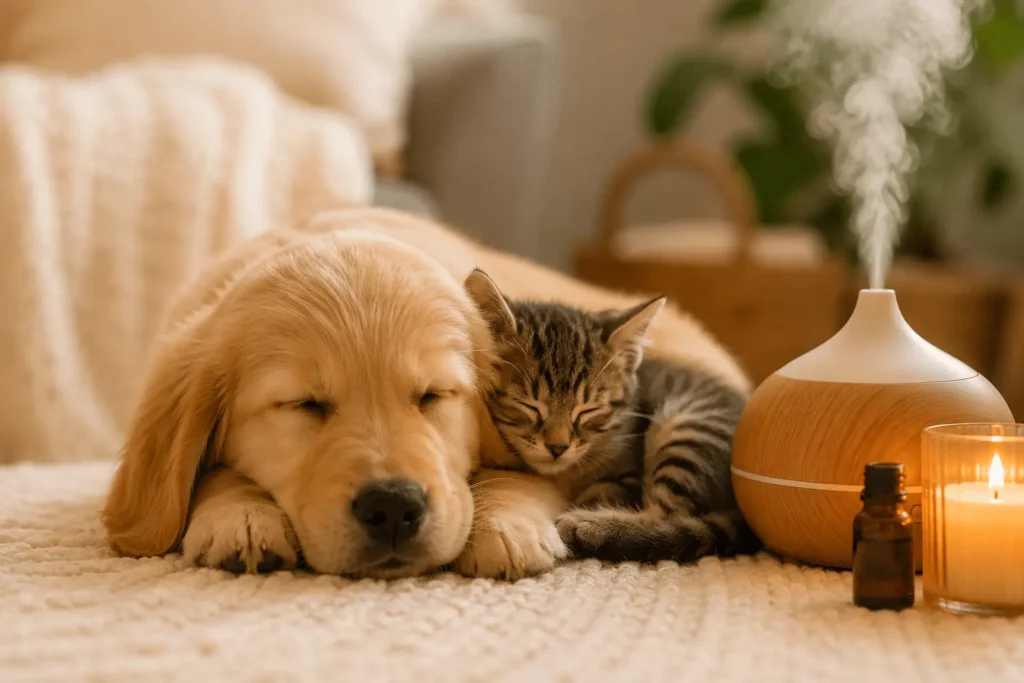
Why Are Pets More Sensitive to Fragrance?
Many people judge candle safety based on their own comfort, but pets experience scent very differently. Dogs have an extremely sensitive sense of smell, which means a fragrance level that feels mild to humans may already feel intense to them. Cats are even more complicated, as their bodies process certain fragrance compounds and essential oils differently, which is why they’re often the focus in pet-safe fragrance discussions.
If you live with birds, extra caution is needed. Compared with cats and dogs, birds are far more sensitive to airborne particles and strong airborne compounds. So just because a candle smells pleasant to you doesn’t mean it feels harmless to your pet.
Where Do the Real Risks Come From?
The discussion is often simplified into “Are scented candles toxic?” but the reality is far more nuanced. The bigger concern is usually how the candle is formulated and how it’s used.
Certain Essential Oil Ingredients
Many consumers assume natural essential oils are automatically safer than synthetic fragrance, but that isn’t always true. Some ingredients commonly mentioned in pet safety discussions include:
- Tea Tree
- Eucalyptus
- Cinnamon
- Clove
- Peppermint
This doesn’t mean exposure automatically creates danger, but high concentration, prolonged exposure, and poor ventilation can significantly increase risk.
This is also why fragrance formulation matters far more than simple marketing labels. In professional custom fragrance development, ingredient balance, delivery strength, and intended use environment are all considered together.
Smoke and Air Quality
Fragrance itself isn’t always the main issue. Candle combustion can also create concerns. If a candle burns poorly, produces visible soot, or has an overgrown wick creating excessive smoke, the resulting airborne particles may become a respiratory irritant.
In some cases, the bigger problem isn’t the scent—it’s the air quality.
Long Burn Time in Small Spaces
Many real pet owner discussions point to the same issue: sometimes the product itself isn’t the main problem, but the usage environment is.
Burning a candle for hours in a small enclosed room, without ventilation, while the pet has no way to leave the space creates a very different risk profile than occasional controlled use.
Cruelty-Free Does Not Mean Pet-Safe
This is one of the most common misunderstandings.
Cruelty-Free usually means the product was not tested on animals.
Pet-Safe suggests a lower risk for pets in the living environment.
These are completely different concepts.
The same applies to vegan claims. A vegan candle does not automatically mean it’s safer for pets.
The more important questions are:
- How strong is the fragrance concentration?
- Does it contain potentially problematic essential oils?
- Is the room properly ventilated?
- How long is the candle being burned?
- Can the pet freely leave the space?
These factors matter far more than marketing labels.
Are Some Fragrance Types Less Aggressive?
Not all fragrance profiles feel equally intense in a living environment.
Heavier spicy or concentrated herbal blends may feel stronger in enclosed spaces, while cleaner or lighter profiles are often easier to live with.
For example, softer floral fragrance oils or fresher citrus fragrance oils are often perceived as less overwhelming than dense spice-heavy concepts, although concentration still matters.
Similarly, broader home fragrance oils designed for ambient use are often formulated differently from highly concentrated niche applications.
Final Answer
If your scented candle is heavily fragranced, burned for long periods, used in a poorly ventilated room, or contains ingredients pets may be more sensitive to, it may not be the best fit for your home.
But that doesn’t mean all scented candles are automatically harmful. In most cases, the real deciding factors are formulation, concentration, environment, and responsible use.