
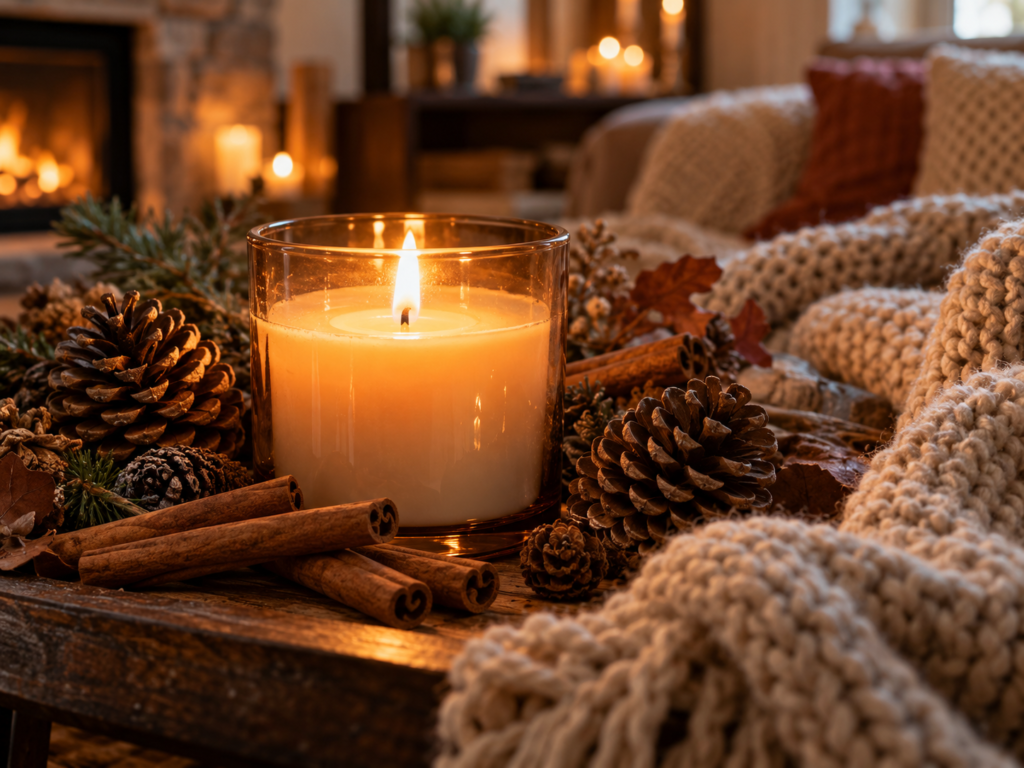
Warm spice, gourmand, and woody-amber scents create the cozy feeling most people want from fall and winter, and layering two or three complementary notes does it better than one strong candle alone.
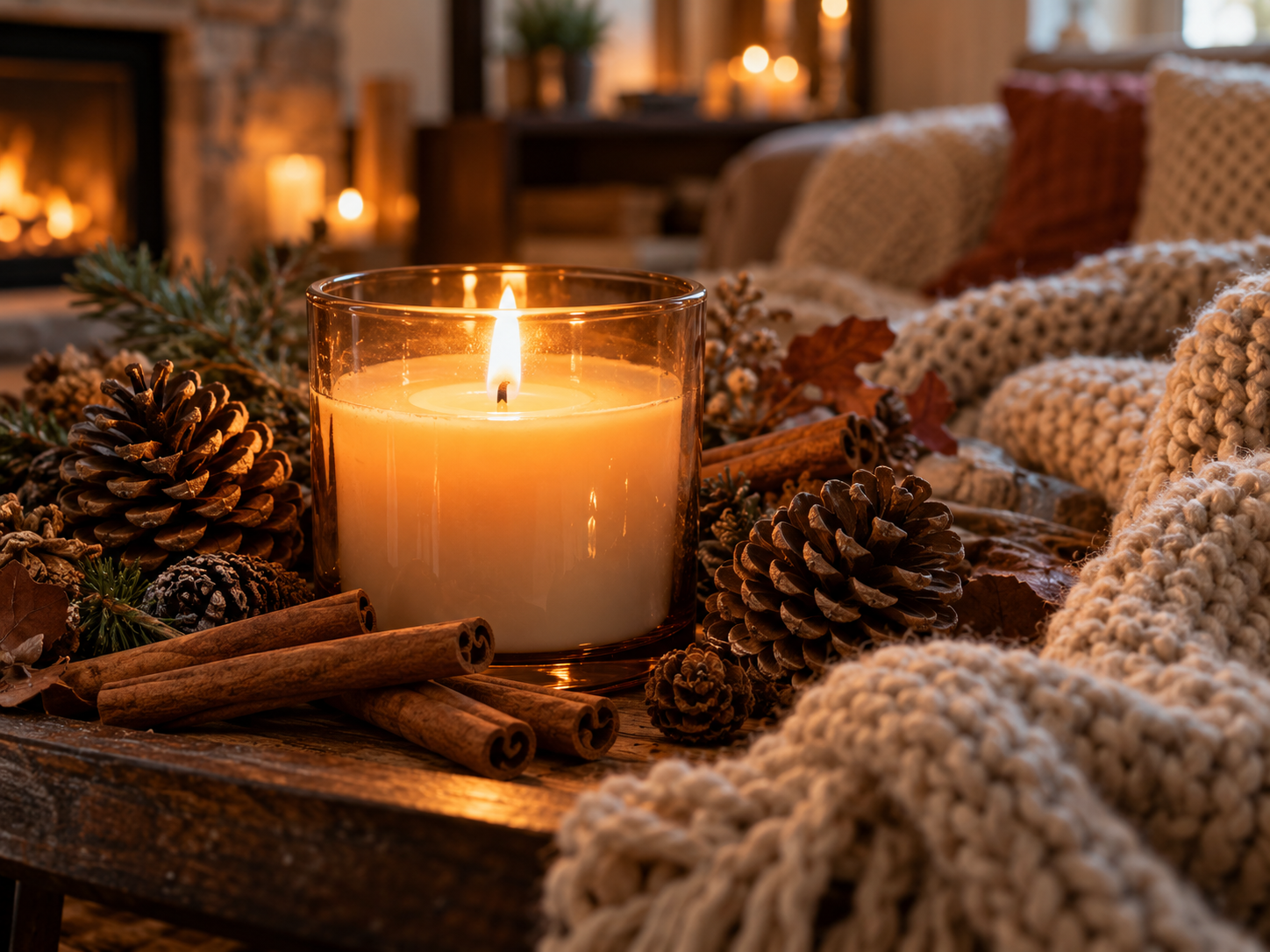
The best fall and winter home fragrances lean on warm spice, gourmand, and woody-amber notes because those scent families read as comforting the moment temperatures drop. Cinnamon, clove, vanilla, sandalwood, and amber form the core palette, and combining two or three of them thoughtfully creates a much richer, more “cozy” effect than relying on a single strong scent.
Key Takeaways
- Warm spice (cinnamon, clove, nutmeg), gourmand (vanilla, brown sugar, baked goods), and woody-amber notes define cold-weather scenting.
- Layering a spice note with a woody or gourmand base creates depth without one scent overpowering the room.
- Holiday scenting works best when kept to one dominant fragrance per room, especially when guests are visiting.
- Deeper winter notes tend to last longer in candle form, which matters for long, dark evenings.
- This guide is the fall and winter half of our broader seasonal scent guide.
The Core Scent Families for Fall and Winter
Three fragrance families do most of the work in cold-weather scenting, and understanding what each one contributes makes it easier to build a cozy rotation.
- Warm spice, including cinnamon, clove, nutmeg, and ginger, brings the classic “holiday kitchen” association
- Gourmand notes, such as vanilla, brown sugar, caramel, and baked apple, add sweetness and softness
- Woody and amber notes, like sandalwood, cedar, vetiver, and amber resin, ground the blend so it doesn’t read as overly sweet
Most memorable fall and winter scents pull from at least two of these three families. A candle that’s purely spice can feel sharp, while one that’s purely gourmand can feel cloying, but spice plus wood, or gourmand plus wood, tends to feel balanced. Gourmand and woody notes are the two building blocks worth knowing well if you’re shopping for cold-weather scents, and general guidance from the International Fragrance Association on how fragrance families are grouped can help make sense of ingredient lists.
Popular Fall and Winter Scent Pairings
These combinations show up again and again in seasonal candle and diffuser lines because they consistently work well together.
- Cinnamon + vanilla: the classic bakery pairing, warm and universally well-liked
- Clove + orange peel: a spiced-citrus combination that feels festive without being too sweet
- Fig + cedarwood: earthy and grounding, popular for a more understated cozy feel
- Sandalwood + amber: deep and warm, a strong choice for late winter and low-light evenings
- Pumpkin + brown sugar: a softer, less candy-like take on the classic pumpkin spice profile
- Pine + frankincense: resinous and traditional, especially popular through the December holidays
How to Layer Scents for a Cozy Effect
Layering means pairing complementary fragrances in the same space, not stacking unrelated ones. The simplest approach is choosing one “top” note, usually a spice or citrus accent, and one “base” note, usually something woody, sweet, or resinous, so the two support rather than compete with each other.
- Start with one dominant scent per room and treat any second fragrance as a background accent only
- Pair a spice-forward candle in the living room with a lighter, woody diffuser in a hallway or entry so the transition between spaces feels intentional
- Avoid placing two strong, unrelated scents (like pine and vanilla) in the same open-plan room, since they can clash rather than blend
- Let a candle handle the main seating area and a smaller diffuser handle secondary rooms like a bathroom or office
If you’re unsure whether a candle or diffuser suits a given room, our comparison of candles versus reed diffusers walks through the tradeoffs in more detail.
Holiday Scenting Without Overwhelming a Space
Holiday scents are easy to overdo, especially with guests in a smaller home. The safest approach is picking one signature holiday scent for shared spaces and keeping everything else neutral or unscented, a tip echoed in holiday hosting advice from Better Homes & Gardens.
- Choose one “hero” scent for the main living area rather than scenting every room individually
- Skip strongly scented candles in the kitchen or dining room while food is being prepared or served, since food and fragrance can compete
- Ventilate briefly between guests arriving, since a room that’s been closed up and heavily scented for hours can feel heavy to someone walking in fresh
- Follow basic safety practices from the National Candle Association, such as keeping candles away from decorations, trimming the wick before each burn, and never leaving them unattended during a gathering
This idea of a single, consistent signature scent is the same principle many hotels use in shared spaces. Looking at how hotel fragrance oils are chosen for lobbies during the holiday season is a helpful reference for keeping a home scent memorable without being overwhelming, a strategy design outlets like Architectural Digest have also highlighted when covering hospitality interiors.
Why Winter Scents Need to Be Stronger Than Summer Ones
Cold, dry indoor air actually carries scent less efficiently than warm, humid air, which is part of why winter fragrances are formulated to be richer and more concentrated. Heated indoor air is also typically drier, and dry air can make fragrance dissipate faster, so a winter candle may need a slightly longer burn or a stronger initial throw to fill the same room a lighter summer scent would fill easily. Background on how humidity and temperature affect odor perception has been explored by researchers at the Monell Chemical Senses Center. If you’ve noticed a favorite fall or winter candle fading faster than expected, our guide on making fragrance last longer covers practical fixes for exactly this issue, and general background on how the body detects and adapts to smells is available through the NIH News in Health resource.
Quick Reference: Fall/Winter Notes at a Glance
| Mood | Lead Note | Pairs Well With |
|---|---|---|
| Bakery-warm | Cinnamon | Vanilla, clove, orange peel |
| Earthy-cozy | Fig | Cedarwood, amber, musk |
| Deep & grounding | Sandalwood | Amber, vetiver, frankincense |
| Festive & traditional | Pine | Frankincense, clove, orange |
For the warmer-weather counterpart to this guide, including how to lighten things up once spring arrives, see our spring and summer scent guide, or return to the full seasonal scent guide for a month-by-month overview.
Curious How These Scents Are Made?
If you’re interested in how fragrance oils are developed and sourced behind the scenes, CQ Fragrance shares more about our craft and process.