
Short answer
Perfume oil is a concentrated fragrance that uses oil, not alcohol, as its base. In retail it usually means a ready-to-wear roll-on or dropper bottle of scent diluted in a carrier oil. In the trade it can also mean an alcohol-free fragrance concentrate that a brand dilutes into its own finished product.
Key Takeaways
- Perfume oil is fragrance plus a carrier oil, with no alcohol in the base.
- The term has two meanings: a finished oil-based perfume, and an alcohol-free concentrate for brands.
- Oil-based perfume tends to sit closer to the skin and project less than an alcohol spray.
- Brands should confirm carrier, concentration, skin-contact grade and documents before buying or selling.
What is perfume oil?
Perfume oil is a fragrance blended into an oil base instead of alcohol. The scent comes from aroma materials, which can be natural, synthetic or a mix, and the oil carries them onto the skin.
These are the usual parts of a finished perfume oil:
- Fragrance: a blend of aroma materials, often supplied as a fragrance oil.
- Carrier oil: jojoba, fractionated coconut, sweet almond or similar skin-friendly oils.
- Optional extras: some brands add vitamin E or a mild fixative, though a plain two-part blend is common.
- No alcohol: this is the main difference from an eau de parfum or eau de toilette spray.
Fragrance oils themselves are not the same as essential oils. For that difference, read fragrance oil vs essential oil.
What are the two meanings of perfume oil?
Consumers use “perfume oil” for a finished, ready-to-wear product, while manufacturers often use it for an alcohol-free concentrate. Knowing which meaning applies prevents confusion when you source.
| Meaning | What it is | Who uses it | Typical format |
|---|---|---|---|
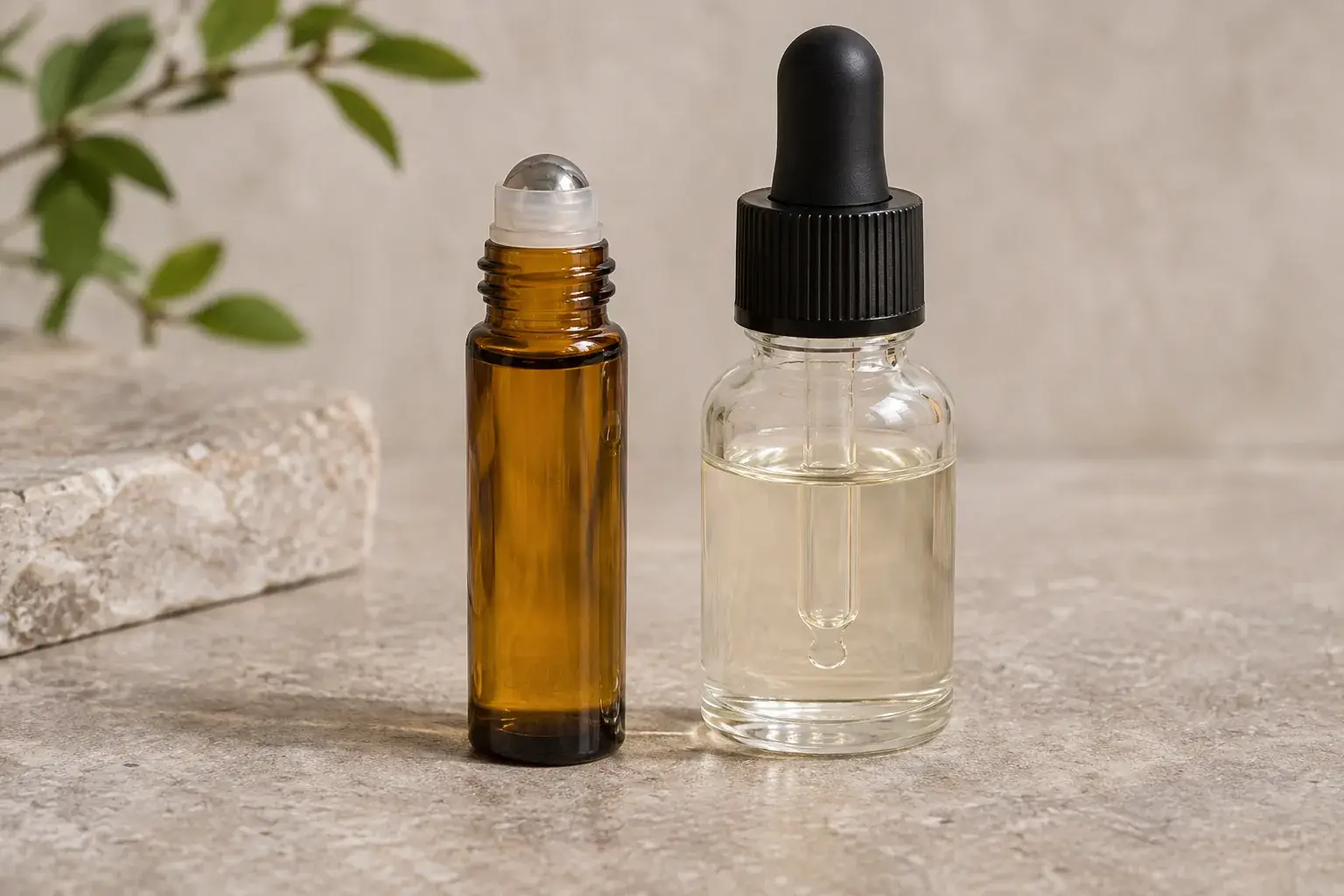
| Finished perfume oil | Fragrance already diluted in carrier oil, ready to apply | Shoppers and retail brands | Roller bottle, dropper bottle |
| Perfume oil concentrate | Alcohol-free concentrated fragrance for brands to dilute | Perfume brands, private label buyers | Bottles or drums sold by weight or volume |
A concentrate is a raw material for a brand. It can become an oil perfume with a carrier, an alcohol perfume with perfumer’s alcohol or a solid perfume with wax.
How is perfume oil different from alcohol perfume?
Perfume oil uses an oil base and alcohol perfume uses an alcohol base, which changes how the scent opens, spreads and fades. Oil-based blends usually sit closer to the skin, while alcohol sprays project more at first.
- Base: carrier oil versus perfumer’s alcohol (sometimes with a little water).
- Evaporation: alcohol evaporates quickly and carries scent into the air. Oil evaporates slowly and stays on the skin.
- Projection: oil-based scent usually opens quieter and stays closer to the body.
- Application: oil goes on with a roller or dropper at pulse points, while alcohol is sprayed.
- Feel: oil can leave a slight film. Alcohol feels dry.
This article does not repeat the full format comparison. See fragrance oil vs spray for that, and fragrance vs perfume for the wider terms.
How is perfume oil used?
Apply perfume oil sparingly to clean skin at pulse points with a roller ball or dropper. A little goes a long way because the oil is concentrated.
- Choose clean, dry skin. Wrists, neck and inner elbows are the common points.
- Apply a small amount. One or two passes of the roller is usually enough.
- Do not rub. Let the oil settle on the skin.
- Avoid clothing and fabrics. Oil can stain.
- Patch test first. Try a small amount on a small area, and stop if irritation appears.
Some people layer oil under an alcohol spray. This is a styling choice, not a rule.
What are the pros and limits of perfume oil?
Perfume oil is alcohol-free and stays close to the skin, but it projects less and can feel oily. These are tendencies, not guarantees, and results vary by oil and skin.
- Alcohol-free: some people who dislike the dryness of alcohol sprays prefer an oil base. Skin response varies from person to person.
- Close to the skin: a quieter, more personal scent.
- Compact: a roller bottle is easy to carry and has no spray mechanism.
- Weaker projection: oil rarely fills a room the way a spray does.
- Oily finish: the carrier can leave a film, and heavy use can mark clothing.
Claims about longevity differ by brand and blend, so treat them as marketing unless backed by testing.

What should brands and buyers check when sourcing perfume oil?
Brands should confirm which meaning of perfume oil they are buying, then check the carrier, concentration, skin-contact grade and documents. Mixing up a concentrate and a finished oil is a common sourcing error.
- Concentrate or finished: ask whether the product is alcohol-free concentrate to dilute, or ready to fill into roller bottles.
- Carrier and concentration: confirm the carrier oil and the fragrance share, since both change scent strength, color and feel.
- Skin-contact grade: perfume oil is worn on the skin, so check that the fragrance is intended for that use. See skin-safe fragrance oil.
- Documents: request the safety data sheet and IFRA-related documents for the specific fragrance and batch. IFRA’s Standards page explains the limits it sets, and the Standards library lists them individually.
- Stability and packaging: test for color change, separation and leakage in the roller bottle, and check shelf life with the fragrance oil shelf life guide.
- Regulation and labeling: confirm local cosmetic requirements for a skin product. This article is not legal advice.
The guide to starting a perfume brand covers the full launch process.
How does CQ Fragrance approach this?
CQ Fragrance supplies perfume oils as alcohol-free concentrated oils, and the customer adds their own alcohol or carrier to make the final product.
- Perfume oils page: its category lists alcohol-free concentrated oils for fine fragrance, with dilution done by the customer.
- OEM/ODM production: production MOQ starts from 1 kg per fragrance, as listed on its OEM/ODM page.
- Custom scents: brands can brief a scent through custom fragrance development, with sample approval before production.
- Documents: its site lists IFRA documentation, MSDS and export documents. Ask for those specific to your fragrance and batch.
MOQ depends on the service, so confirm the right figure, samples and lead time for your own project.
Sourcing perfume oil for your brand?
Tell CQ Fragrance your format, scent direction and target market, and discuss samples, custom development or OEM/ODM.
Request a quoteFrequently Asked Questions
What is perfume oil?
Perfume oil is a concentrated fragrance that uses oil, not alcohol, as its base. It is sold as a finished roll-on or dropper product, or as an alcohol-free concentrate for brands to dilute.
What is perfume oil made of?
Perfume oil is made of fragrance, which can be natural, synthetic or both, blended into a carrier oil such as jojoba or fractionated coconut oil. A plain blend contains no alcohol.
Is perfume oil the same as essential oil?
No, perfume oil is not the same as essential oil. Essential oils are single plant extracts, while perfume oil is a blended fragrance in an oil base and may include synthetic materials.
Does perfume oil last longer than alcohol perfume?
Perfume oil often stays on the skin longer because oil evaporates slowly, but it projects less. Results vary by blend and skin, so treat longevity claims with care unless they are tested.
How do you use perfume oil?
You use perfume oil by applying a small amount to clean skin at pulse points with a roller or dropper. Avoid clothing, and patch test first.
Bottom line
Perfume oil is fragrance in an oil base with no alcohol, and the term can mean a finished roll-on or a concentrate for brands. When you source it, confirm which one you are buying, plus the carrier, concentration and documents.