

A house that always smells good starts with eliminating odor sources, then layering two or three scent formats at the right strength for each room.
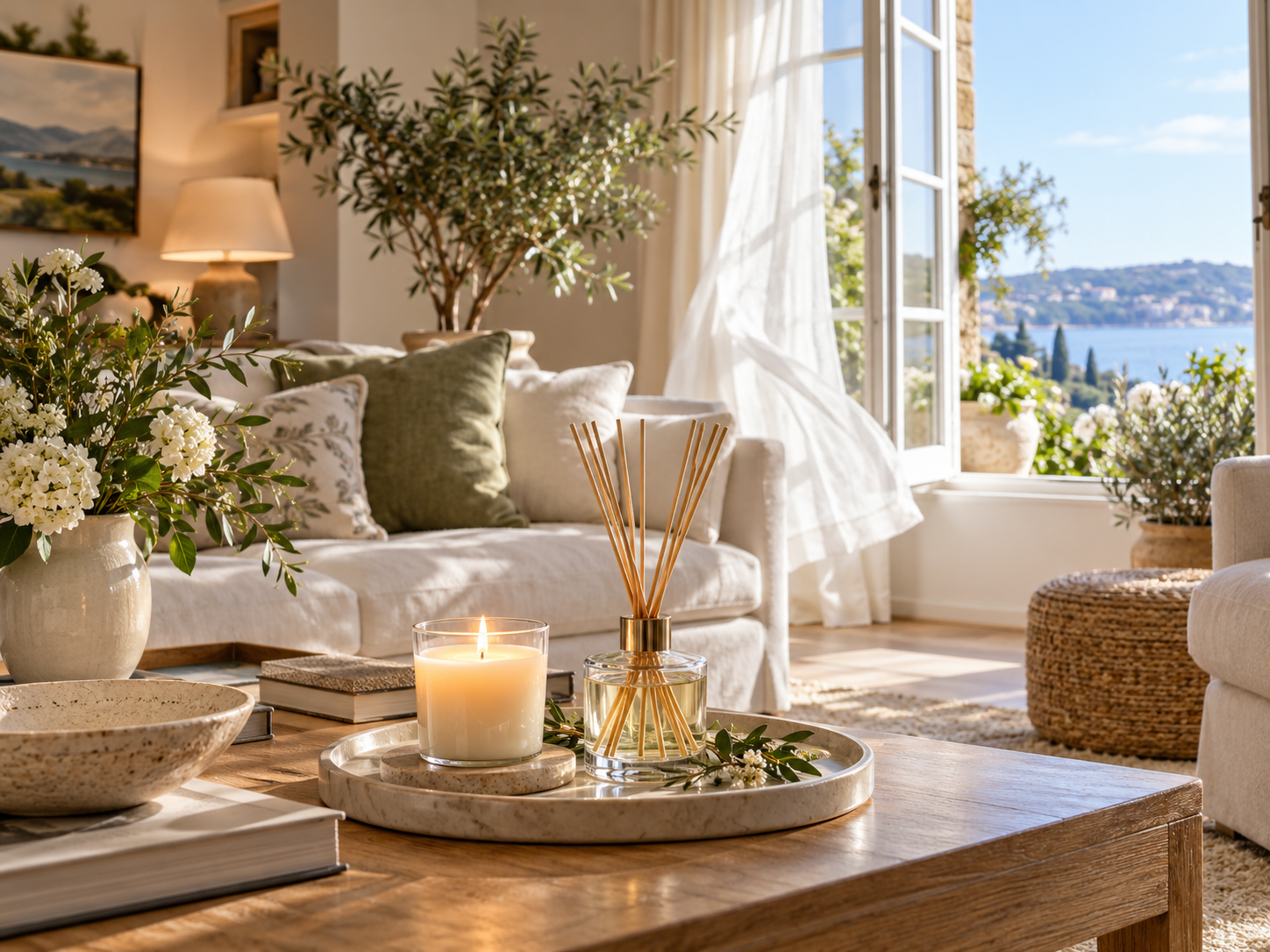
The fastest way to make your house smell amazing all the time is to remove the odors at their source first, then build scent in layers using a candle, a diffuser, and a room spray at matched strengths for each space. Skipping the first step is the most common mistake: no amount of fragrance product can fully cover cooking smells, pet odor, or musty air, and trying to do so usually just creates a muddled, competing smell instead of a clean one.
Key Takeaways
- Clean and ventilate first. Fragrance should enhance a clean-smelling home, not mask a dirty one.
- Layer two or three scent sources (candle, diffuser, room spray) rather than relying on one.
- Match scent intensity to room size and airflow, not just personal preference.
- Rotate scents seasonally and give your nose breaks to avoid scent fatigue, also called nose-blindness.
- Use lighter, cleaner scents in small or enclosed rooms and richer scents in larger, open spaces.
Start by Eliminating Odors, Not Masking Them
A truly good-smelling home has less odor to cover in the first place, so odor elimination always comes before fragrance. Fabric, carpet, and upholstery trap cooking smoke, pet dander, and moisture far more than hard surfaces do, which is why a room can look spotless and still smell stale.
A few habits handle most of the odor sources that undermine home fragrance:
- Open windows for 10 to 15 minutes daily, even in cold weather, to exchange stale indoor air.
- Wash removable fabrics, throw pillow covers, pet beds, and kitchen towels weekly.
- Run the exhaust fan every time you cook, not just for smoky or strong-smelling meals.
- Empty trash and recycling before they start to smell, not after.
- Vacuum carpets and rugs at least weekly, since they hold onto odor particles long after a smell seems to have faded.
- Check for hidden moisture sources like a damp bath mat, a musty washing machine gasket, or a forgotten wet towel.
The National Candle Association and similar industry groups note that fragrance products are designed to scent clean air, not to neutralize heavy odor, which is why the cleaning step genuinely changes how effective any candle or diffuser feels afterward.
Layer Your Scent Sources Instead of Relying on One
A house smells consistently good when at least two fragrance formats work together, because each one covers a gap the others leave. A candle only scents a room while it burns, a reed diffuser scents constantly but at low intensity, and a room spray gives an instant burst but fades within an hour.
A simple, reliable layering combination looks like this:
- A diffuser for baseline scent. Reed or ultrasonic diffusers using diffuser fragrance oils run continuously in the background, so the room never smells empty even when nobody has lit anything.
- A candle for evening ambiance. Burning a candle scented with candle fragrance oils for an hour or two in the evening adds warmth and a stronger, more immediate scent on top of the diffuser’s baseline.
- A room spray for instant refresh. A quick spritz before guests arrive or after cooking resets the air in seconds, without waiting for a candle to build up heat or a diffuser to circulate.
For readers who are choosing between formats rather than combining them, a closer breakdown of how candles and reed diffusers compare on scent strength and convenience is covered in this comparison of candles versus reed diffusers, and how wax melts stack up against candles is explained in this wax melt versus candle guide.
Match Scent Intensity to Room Size
The right fragrance intensity depends on square footage and airflow, so the same candle that fills a small bathroom can feel like nothing in an open-plan living area. A common frustration readers report is a candle that “doesn’t smell like anything,” which is often a room-size mismatch rather than a weak product; the mechanics of that specific problem are covered in depth in this guide to why a candle doesn’t smell as strong as it should.
| Room Size | Best Format | Notes |
|---|---|---|
| Small (bathroom, closet, entry nook) | Sachet beads or a single small candle | Sachet fragrance beads work well in enclosed spaces with little airflow. |
| Medium (bedroom, home office) | One candle or one diffuser | Keep intensity low in rooms used for sleep or focus. |
| Large (open-plan living/dining) | Multiple sources layered | A single candle rarely reaches every corner of an open floor plan. |
For room-by-room recommendations on which scent families and formats fit best, the full breakdown is in our room-by-room home fragrance guide.
Avoid Scent Fatigue and Nose-Blindness
A home can genuinely smell great and still seem scentless to the people who live there, because the human sense of smell adapts to constant, unchanging odors within minutes. Researchers at the Monell Chemical Senses Center have studied this olfactory adaptation extensively, and it explains why guests often compliment a scent that residents can no longer detect at all.
A few habits reduce the effect without giving up a signature scent:
- Rotate between two or three fragrances so your nose doesn’t fully adapt to any single one.
- Step outside for a few minutes, then re-enter to judge scent strength honestly.
- Ask a guest or family member for an honest read, since their nose hasn’t adapted the way yours has.
- Give rooms an occasional scent-free day so your sensitivity resets.
Rotate Scents With the Seasons
Seasonal rotation keeps a home smelling intentional rather than stale, because the same fragrance in every season starts to blend into the background faster. Lighter, brighter notes tend to suit spring and summer, while warmer, deeper notes suit fall and winter.
- Spring and summer: citrus and green notes from citrus fragrance oils or green fragrance oils feel fresh and airy.
- Fall and winter: woody and gourmand notes from woody fragrance oils or gourmand fragrance oils feel warm and cozy.
- Year-round anchors: a favorite floral fragrance oil or luxury fragrance oil can stay in rotation while lighter accents change with the season.
Publications like Real Simple and Good Housekeeping regularly cover seasonal home-scenting trends, and their general guidance lines up with what fragrance formulators see in consumer preference: lighter in warm months, richer in cold ones.
Put It All Together
A consistently good-smelling home comes from a routine, not a single product purchase. Clean and ventilate first, layer two or three scent formats at a strength matched to each room, watch for nose-blindness, and rotate scents with the seasons so the whole house still feels intentional a year from now.
Readers curious about how fragrance oils actually get from raw materials to finished product can find the process explained in this guide to how fragrance oils are made.
Curious Where Home Fragrance Oils Come From?
If you’re interested in how the scents behind your favorite candles and diffusers are actually developed and sourced, take a look behind the scenes at CQ Fragrance.