
Fragrance Diffuser vs Humidifier: Can You Use Oil in Both?
Fragrance diffusers are built to disperse scent; humidifiers are built to add moisture. While both can mist water, adding fragrance oil to a humidifier risks damage and poor scent quality — the two devices are not interchangeable.
The Short Answer
Technically, both devices can mist liquid into the air, but they are engineered for different jobs. A fragrance diffuser is designed to disperse essential or fragrance oils efficiently. A humidifier is designed to increase room humidity with plain water. Putting fragrance oil in a humidifier is generally not recommended — it can damage the device, void warranties, and produce weak or uneven scent. The humidifier operating principles explain why oil is a problem for most units.
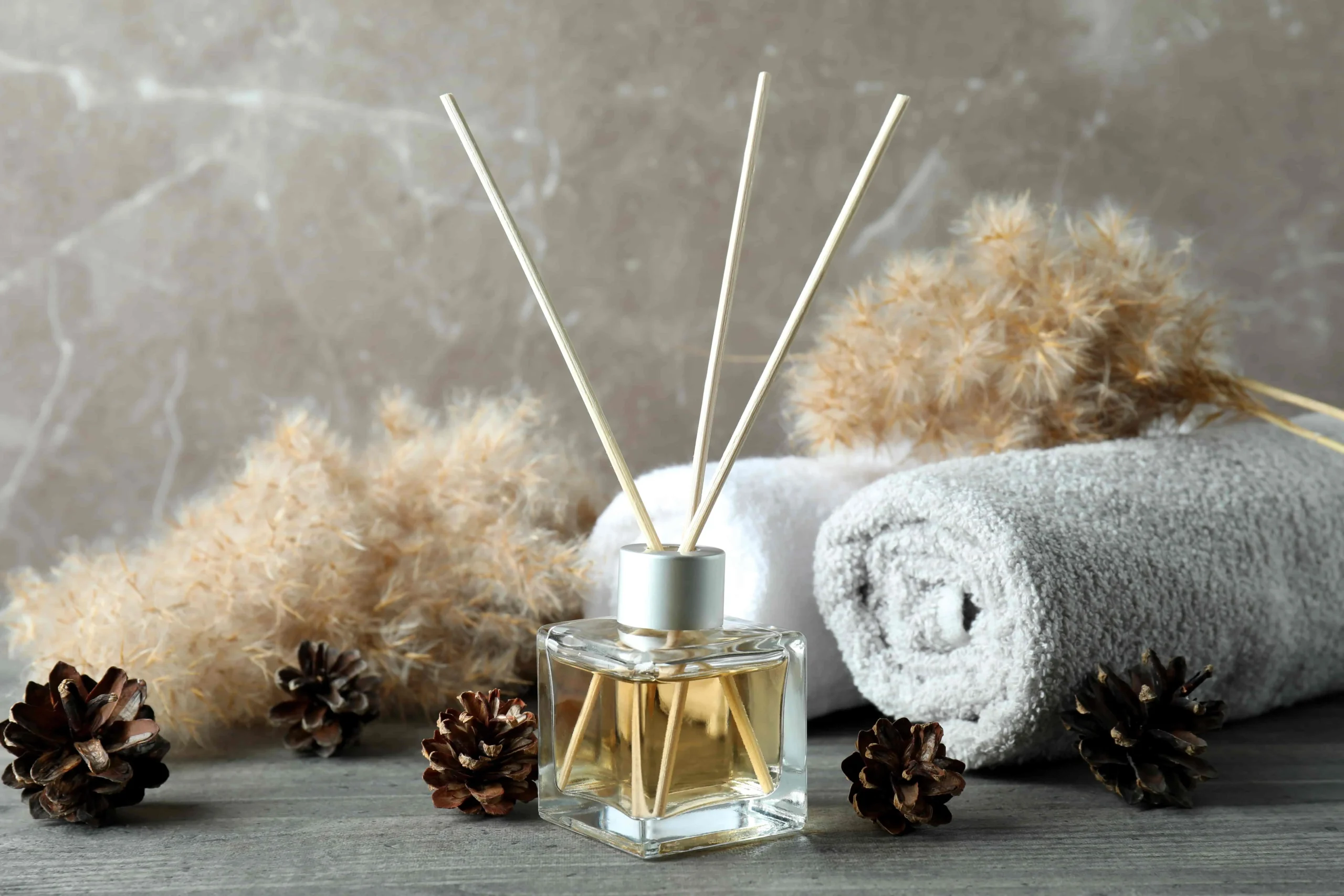
How Fragrance Diffusers Work
How Humidifiers Work
Humidifiers add moisture to dry air, with several types: ultrasonic (cool mist), evaporative (fan over a wick), steam (boiling water), and impeller. Their sole purpose is humidity control — relieving dry skin, sinuses, and static. They are not designed to aerosolize oil: oil can clog wicks, coat ultrasonic membranes, harbor bacteria, and damage internal components. Even “aromatherapy humidifiers” are effectively diffusers in a humidifier body and should use only compatible, water-soluble formulations.
Head-to-Head Comparison

| Factor | Fragrance Diffuser | Humidifier |
|---|---|---|
| Primary purpose | Scent dispersion | Humidity control |
| Fragrance oil use | Designed for it | Not recommended |
| Scent output | Strong, optimized | Weak, uneven |
| Mist output | Minimal-moderate | High (humidity focus) |
| Device risk with oil | None | Clogging, damage |
| Best for | Scenting a room | Adding moisture |
Ultrasonic, Nebulizing & Heat Diffusion
Within diffusers, three technologies dominate. Ultrasonic: vibration atomizes a water-oil mixture into a cool mist — gentle, quiet, suitable for continuous light scenting. Nebulizing: compressed air atomizes pure oil without water — the strongest and purest scent, ideal for larger or commercial spaces. Heat: warming releases scent quickly but can alter delicate top notes. For fresh or delicate fragrance families, ultrasonic and nebulizing preserve the profile better than heat.
Can You Put Fragrance Oil in a Humidifier?
The direct answer: in a standard humidifier, no. Oil does not dissolve in water; it floats, clogs the wick or membrane, and can damage the device. The mist carries little scent because oil is not being aerosolized properly. Even if it works initially, oil residue breeds bacteria and shortens the humidifier’s life. If you want both humidity and scent, use a diffuser for scent and keep the humidifier for moisture — or use a device explicitly designed as a combined aromatherapy humidifier with compatible water-soluble formulations.
Safety Considerations
- Device damage — oil clogs wicks and membranes, shortening lifespan
- Bacterial growth — oil-water mixtures can harbor microbes in tanks
- Scent quality — oil in a humidifier produces weak, uneven throw
- Warranty — most manufacturers void warranty for oil use
- Air quality — improper atomization can irritate lungs
How to Choose
FAQ
Can I put fragrance oil in my humidifier?
Generally no. Oil clogs humidifier wicks and membranes, damages the device, and produces weak scent. Use a diffuser for fragrance instead.
What is the difference between a diffuser and a humidifier?
A diffuser disperses fragrance oil into the air for scenting; a humidifier adds moisture to the air for humidity control. They serve different purposes.
Are ultrasonic diffusers also humidifiers?
Ultrasonic diffusers do add some moisture while scenting, but their mist output is far lower than a dedicated humidifier — they are not a substitute for humidity control.
What type of diffuser gives the strongest scent?
Nebulizing (air-atomizing) diffusers deliver the strongest scent because they disperse pure oil without water dilution — ideal for large or commercial spaces.