
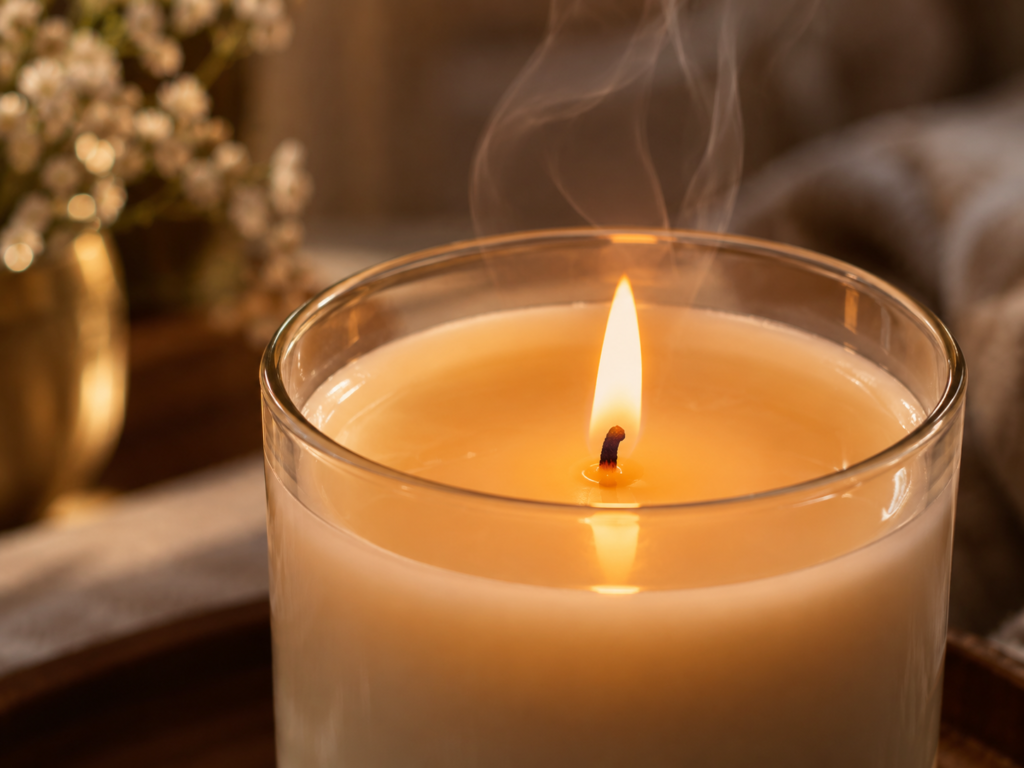
A weak-smelling candle is almost always caused by placement, burn time, wick size, candle age, or nose-blindness, not a low-quality product.
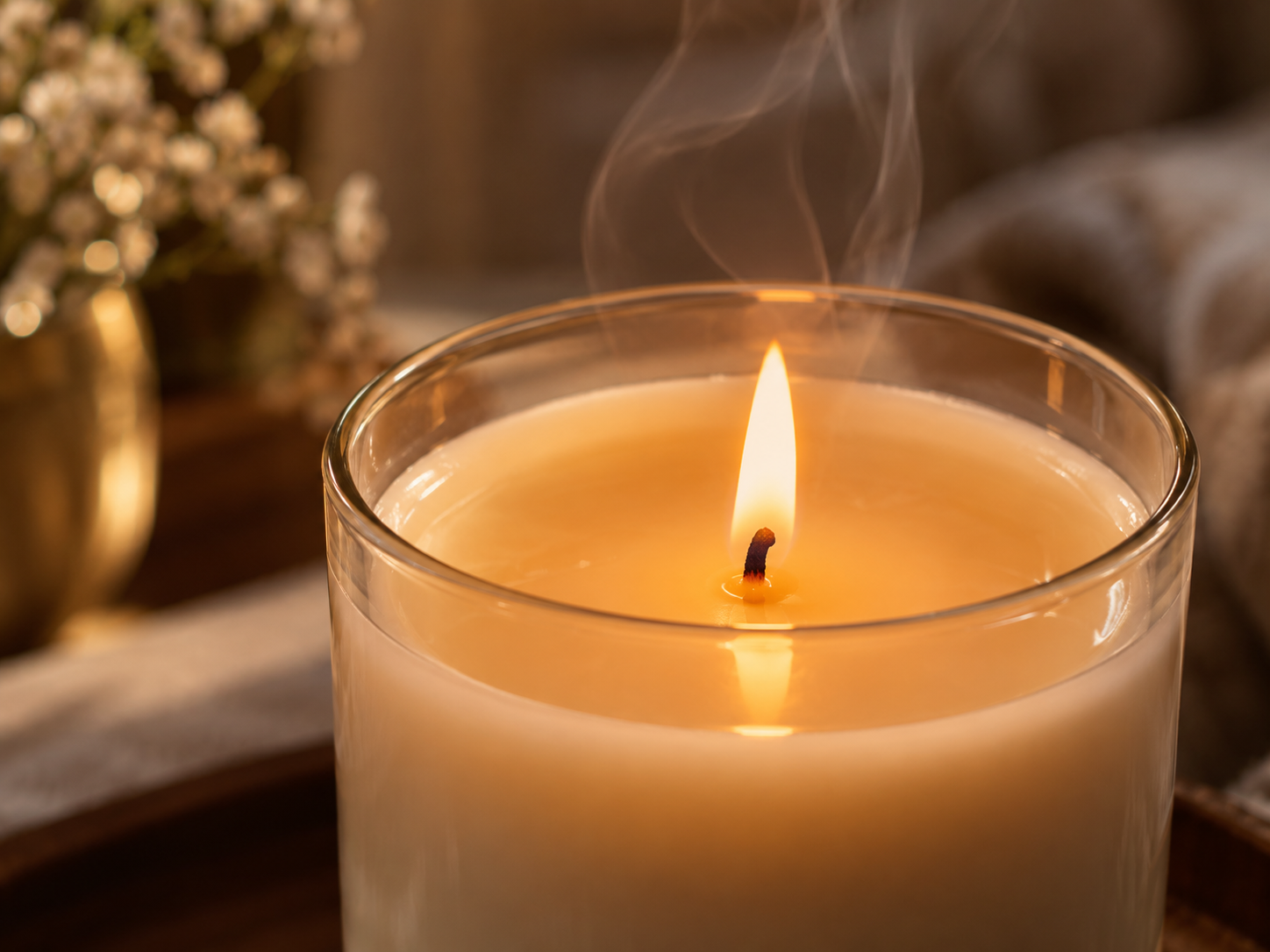
The most common reasons a candle doesn’t smell strong enough are poor placement or airflow, too short a burn time, a wick that’s too small for the jar, an old or improperly stored candle, or simple nose-blindness from smelling the same scent too long. None of these mean the candle itself is defective, and nearly all of them can be fixed at home without buying a new product.
Key Takeaways
- Cold throw is the scent you smell from an unlit candle; hot throw is the scent released while burning. Weak hot throw is the real complaint behind most “my candle has no smell” reports.
- Candles need to burn long enough to form a full, even melt pool before they release their strongest scent.
- Airflow, room size, and candle placement affect perceived strength as much as the fragrance itself does.
- Nose-blindness, the natural adaptation of smell to constant odors, makes a candle you burn daily seem weaker over time even when nothing has changed.
- Old or poorly stored candles lose fragrance oil to evaporation, which is a real, physical drop in scent strength.
Cold Throw vs. Hot Throw, Explained Simply
Cold throw and hot throw describe two different things, and confusing them is the root of a lot of candle disappointment. Cold throw is how strong a candle smells when it’s not lit, usually from the wax itself or by holding the jar close to your nose. Hot throw is how strong it smells once it’s burning, which is the number that actually matters for scenting a room.
- Strong cold throw, weak hot throw: the fragrance oil is present but isn’t vaporizing efficiently, often due to wick size or burn time.
- Weak cold throw, strong hot throw: normal for many candles, since heat is what releases fragrance molecules into the air in the first place.
- Weak on both: usually points to an aged candle, a low fragrance load, or storage issues.
Manufacturers formulate candle fragrance oils specifically to perform under heat, which is why a candle that smells faint straight out of the box can still throw scent well once properly burned in.
Common Causes of a Weak-Smelling Candle
Most weak-throw complaints trace back to one of a handful of fixable issues rather than the fragrance oil itself.
- Placement and airflow. A candle tucked in a corner, behind furniture, or in a drafty spot near a window or vent disperses scent unevenly.
- Burn time too short. Blowing out a candle after 10 or 15 minutes rarely gives it time to melt a full pool of wax.
- Wick size mismatch. A wick that’s too small for the jar diameter burns a narrow tunnel down the middle instead of melting the wax evenly.
- Candle age. Fragrance oil evaporates slowly over time, even in an unopened jar, so older candles genuinely smell weaker.
- Nose-blindness. Burning the same candle daily causes your nose to adapt and stop registering the scent as strongly.
- Room size mismatch. A candle sized for a bathroom will rarely fill an open living room, no matter how well it burns.
The Fix: Give It a Full Melt Pool
A full, even melt pool is what actually releases a candle’s strongest scent, so burn time matters more than almost any other factor. The National Candle Association recommends burning a candle long enough on its first use for the wax to melt evenly across the entire surface, typically one to two hours depending on jar diameter, since cutting that first burn short can cause tunneling that limits scent output for the rest of the candle’s life.
- Let the first burn go until the wax pool reaches the edges of the jar.
- Trim the wick to about a quarter inch before each burn to keep the flame, and the melt pool, consistent.
- Avoid blowing the candle out and relighting repeatedly within a short window, which interrupts pool formation.
The Fix: Rethink Placement and Airflow
Where a candle sits changes how far its scent travels, so placement deserves as much attention as the candle itself. Scent needs gentle air movement to circulate; too much airflow disperses it before it builds up, while too little traps it right around the jar.
- Place candles in open areas of a room rather than corners, shelves, or behind objects.
- Avoid direct drafts from air conditioning vents, ceiling fans on high, or open windows.
- Position at a height roughly level with where people sit or stand, since scent rises with heat.
- Use multiple smaller candles across a large room instead of one candle expected to fill the whole space.
For a broader look at how candles compare to other scenting formats on overall strength and convenience, see this guide to candles versus reed diffusers, and for how melt pool and hot throw compare to wax melts specifically, see this wax melt versus candle comparison.
The Fix: Check Wick Size and Candle Age
A mismatched wick or an aging candle are both physical, not perceptual, reasons a candle underperforms. Neither is something a burn-time adjustment alone can solve.
- Wick too small: the flame stays small and only melts a narrow channel, so most of the wax and fragrance never gets used. This often shows up as visible tunneling down the center of the jar.
- Wick too large: the flame burns hot and fast, which can actually burn off fragrance oil before it has a chance to scent the air properly, and creates soot.
- Old candles: fragrance oil evaporates gradually through wax and packaging over months, so a candle stored for a year or more will smell noticeably weaker than a fresh one, even unused.
- Storage matters: keeping candles in a cool, dark place with the lid on when not in use slows this natural fragrance loss.
The Fix: Rule Out Nose-Blindness
Your own nose may be the reason a familiar candle suddenly seems weak, since smell receptors adapt quickly to constant, unchanging scents. This olfactory adaptation is well documented by researchers including those at the Monell Chemical Senses Center, and it explains why a candle burned every evening for weeks can feel like it’s “lost its scent” even though nothing about the product has changed.
- Ask someone who hasn’t been in the room to judge the scent strength.
- Step outside for a few minutes and walk back in to reset your sense of smell.
- Rotate between two or three different candle scents instead of burning the same one daily.
This is the same adaptation effect that shows up across an entire home, not just with one candle; it’s covered in more depth alongside other whole-house strategies in this complete guide to making your house smell amazing.
When It’s Genuinely a Weak Candle
Sometimes the fragrance load in the wax really is too low to throw scent well, and that’s a formulation issue rather than a usage one. Cheaper candles often use a lower percentage of fragrance oil relative to wax to cut costs, which caps how strong the hot throw can ever be, regardless of burn time or placement.
- Look for candles that list a fragrance load percentage, generally 6 to 10 percent or higher for noticeable hot throw.
- Soy and coconut wax blends tend to hold and release fragrance oil differently than paraffin, so results vary by wax type as well as brand.
- If a candle still underperforms after a full first burn, correct wick size, and good placement, the fragrance load is the most likely remaining culprit.
Curious How Fragrance Oils Are Built for Strong Hot Throw?
If you’re interested in what goes into formulating a candle fragrance oil that actually performs once lit, take a look behind the scenes at CQ Fragrance.