
Table of Contents
Custom fragrance development has become a strategic investment for hotels, retail brands, lifestyle companies, and private label businesses. A signature scent is no longer a luxury add-on — it is a brand asset that enhances recognition, emotional engagement, and long-term differentiation.
One of the most common questions businesses ask before starting a project is simple:
How much does custom fragrance development cost?
There is no single fixed price. In 2026, total development investment can range widely depending on formulation complexity, ingredient selection, regulatory requirements, and production scale. Understanding the cost structure is far more valuable than seeking a quick quote.
At Chengquan, we work with B2B clients to provide transparent, structured fragrance development planning. Below is a complete breakdown of what determines custom fragrance cost.
Why Custom Fragrance Costs Vary
Custom fragrance development is not the same as purchasing ready-made perfume oil. It is a multi-stage professional process that includes brand positioning, scent architecture design, laboratory formulation, regulatory compliance, testing, and production adaptation.
Each stage requires technical expertise and specialized resources. The deeper the development process, the greater the investment — but also the stronger the long-term brand value.
Core Cost Components of Custom Fragrance Development
1. Concept & Brand Strategy Phase
This initial stage defines the scent direction. It involves analyzing brand identity, target audience, geographic market, and application environment. Abstract brand values are translated into olfactory keywords and fragrance families.
Typical investment: $1,000 – $5,000
A well-defined strategy reduces unnecessary revisions later and improves cost efficiency overall.
2. Formula Development & Perfumery Work
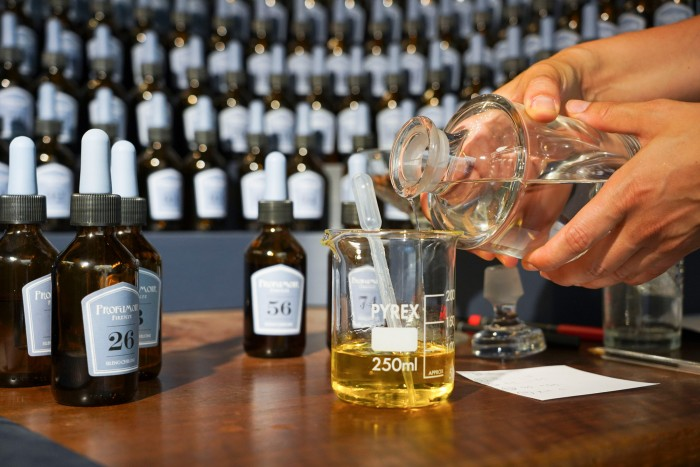
This is the core of the project. Professional perfumers design the fragrance structure, select raw materials, and develop multiple sample iterations for refinement.
Typical investment: $3,000 – $15,000+
Cost depends on several variables:
Complexity of scent structure
Use of natural vs. synthetic materials
Number of revisions
Performance requirements (longevity, projection, diffusion strength)
More layered compositions and premium materials increase development cost.
3. Regulatory & Compliance Support
If the fragrance is intended for international markets, it must comply with relevant standards such as IFRA guidelines, safety documentation, and regional regulatory requirements.
Typical investment: $500 – $3,000
For export-oriented brands, compliance is not optional — it is essential.
4. Stability & Application Testing
Different applications require performance testing. A fragrance used in HVAC diffusion systems behaves differently from one used in candles or personal care products.
Testing may include stability validation, compatibility checks, and diffusion performance evaluation.
Typical investment: $1,000 – $5,000
This phase ensures consistent performance in real-world conditions.
5. Manufacturing & Minimum Order Quantity (MOQ)
Production scale significantly impacts total cost. Small-batch pilot production may require an initial investment of $5,000 – $20,000+, while larger volumes reduce unit cost due to economies of scale.
Manufacturing cost is influenced by raw material procurement volume, packaging format, and production system compatibility.
Comprehensive Budget Overview
When combining all development stages, total investment for an original custom fragrance typically falls into three tiers:
Entry-Level Development: $8,000 – $15,000
Suitable for single-application projects with relatively straightforward scent structures.
Standard Commercial Development: $15,000 – $35,000
Common for hotel signature scents, retail brand identity projects, and private label launches.
Premium Brand-Level Development: $35,000 – $80,000+
Designed for international brands, multi-market expansion, high natural ingredient ratios, and complex multi-layer compositions.
These figures primarily represent development costs. Large-scale production and packaging expenses are calculated separately based on volume.
Key Variables That Influence Final Cost
Beyond the structural stages, several factors affect total investment:
Ingredient grade and sourcing
Natural vs. synthetic composition ratio
Regulatory complexity across target markets
Sustainability or eco-certified material requirements
Product format (diffuser oil, spray, candle, personal care, etc.)
Higher specification projects naturally require higher budgets, but they also deliver stronger differentiation.
Industry Trends Impacting 2026 Costs
In 2026, several market trends influence fragrance development investment:
Rising natural raw material prices
Increased demand for sustainable sourcing
Stricter international regulatory oversight
Growth of niche and independent brands
These trends reinforce the importance of professional, structured fragrance development rather than low-cost imitation.
How to Control Custom Fragrance Development Costs
Cost control begins with clarity. Clearly defining brand positioning and reducing unnecessary revision cycles significantly improves budget efficiency.
Working with an experienced development partner ensures realistic planning and transparent phase-based investment.
At Chengquan, we structure fragrance projects in stages to maintain financial clarity while protecting long-term brand value.
Frequently Asked Questions (FAQ)
1. How much does it cost to create a custom fragrance in 2026?
Most projects fall between $8,000 and $80,000+, depending on complexity, ingredient quality, compliance requirements, and scale of production.
2. What is included in custom fragrance development cost?
Development cost typically covers concept design, perfumer formulation work, sample revisions, regulatory documentation, and testing. Manufacturing and packaging are calculated separately.
3. What is the minimum order quantity for custom fragrance production?
MOQ varies depending on product type and formulation. Higher volumes reduce per-unit cost and improve pricing efficiency.
4. How long does custom fragrance development take?
Most projects require 4–8 weeks, depending on revision cycles and testing requirements.
5. Is custom fragrance development cheaper at larger scale?
Yes. While development costs remain similar, manufacturing cost per unit decreases as order volume increases.
Conclusion
Custom fragrance development is not merely a product expense — it is a strategic brand investment. Understanding the cost structure enables businesses to align budget with long-term brand positioning.
If you are planning a custom fragrance project in 2026, Chengquan provides structured, transparent, and professionally managed development support tailored to B2B clients.